The walls are the attraction
Lucca's Renaissance defensive walls survive all the way round — they were never breached, never needed, and in the nineteenth century were planted with trees and turned into a public promenade. You can walk or cycle the full circuit on top, about four kilometres, looking down into gardens and over rooftops the whole way.
It is free, it is flat, and it is the single best thing to do here. Bicycles are rented at several points near the gates.
⭐ Doing the full loop takes roughly an hour on foot and is the fastest way to understand the shape of a walled city.
The oval square, and the towers
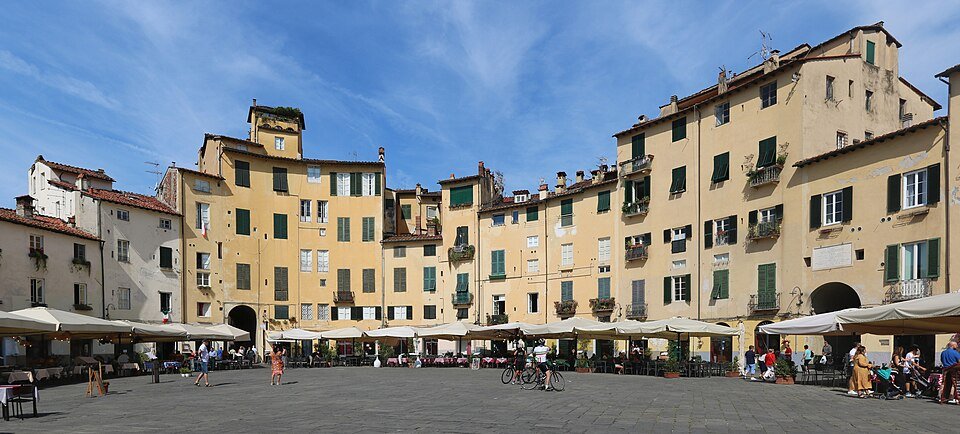
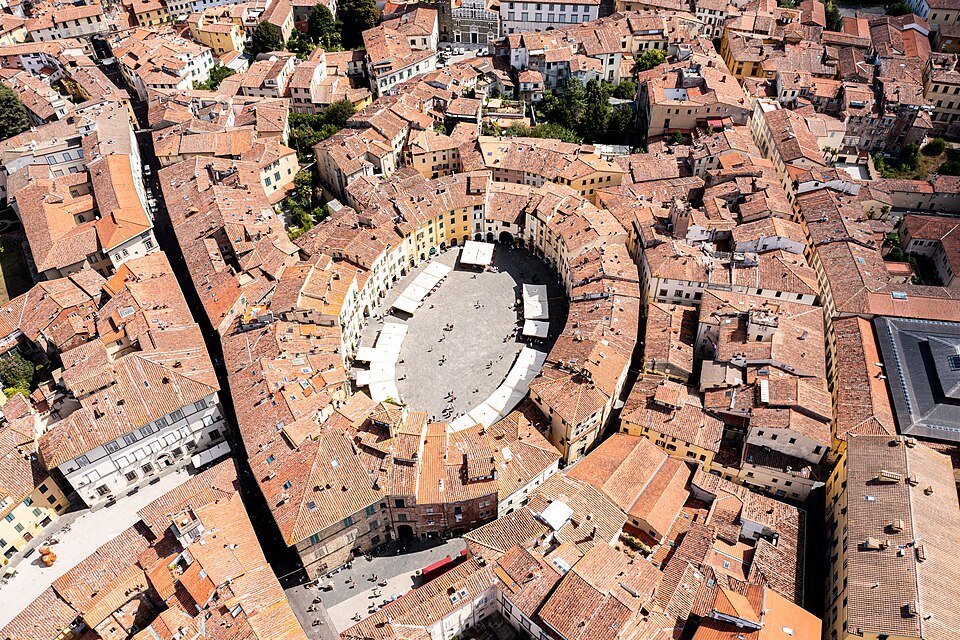
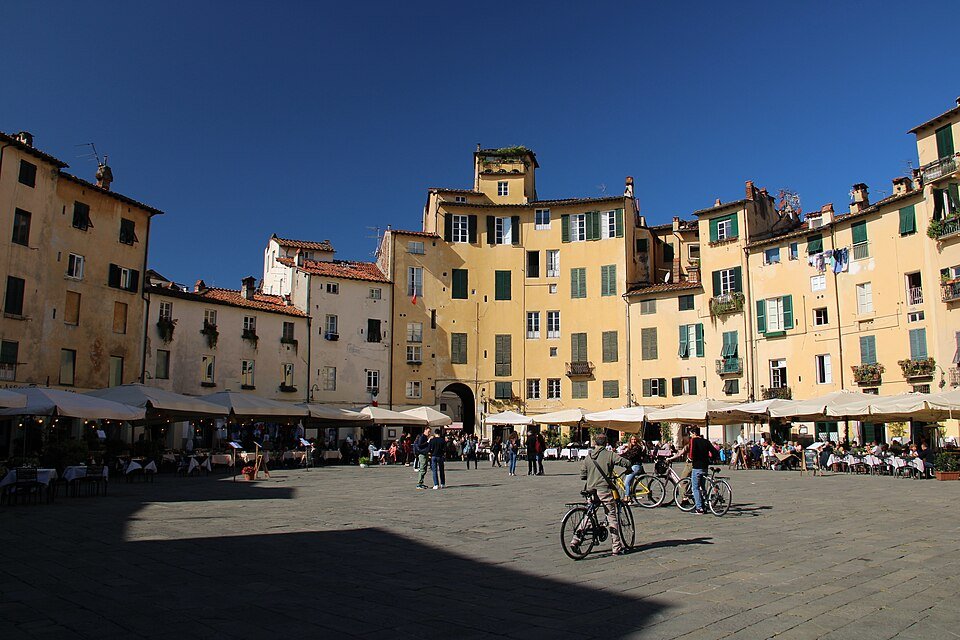
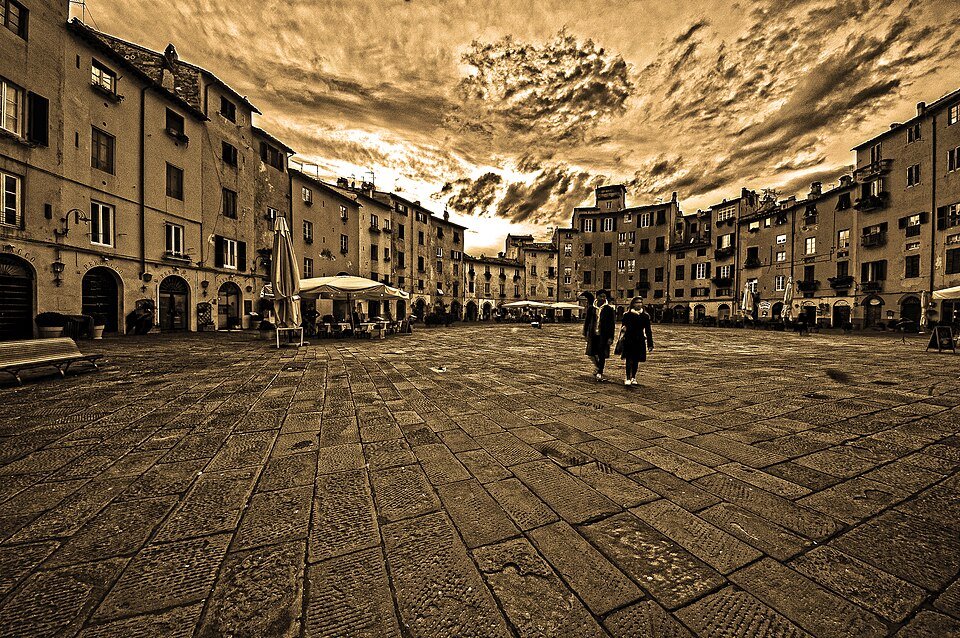
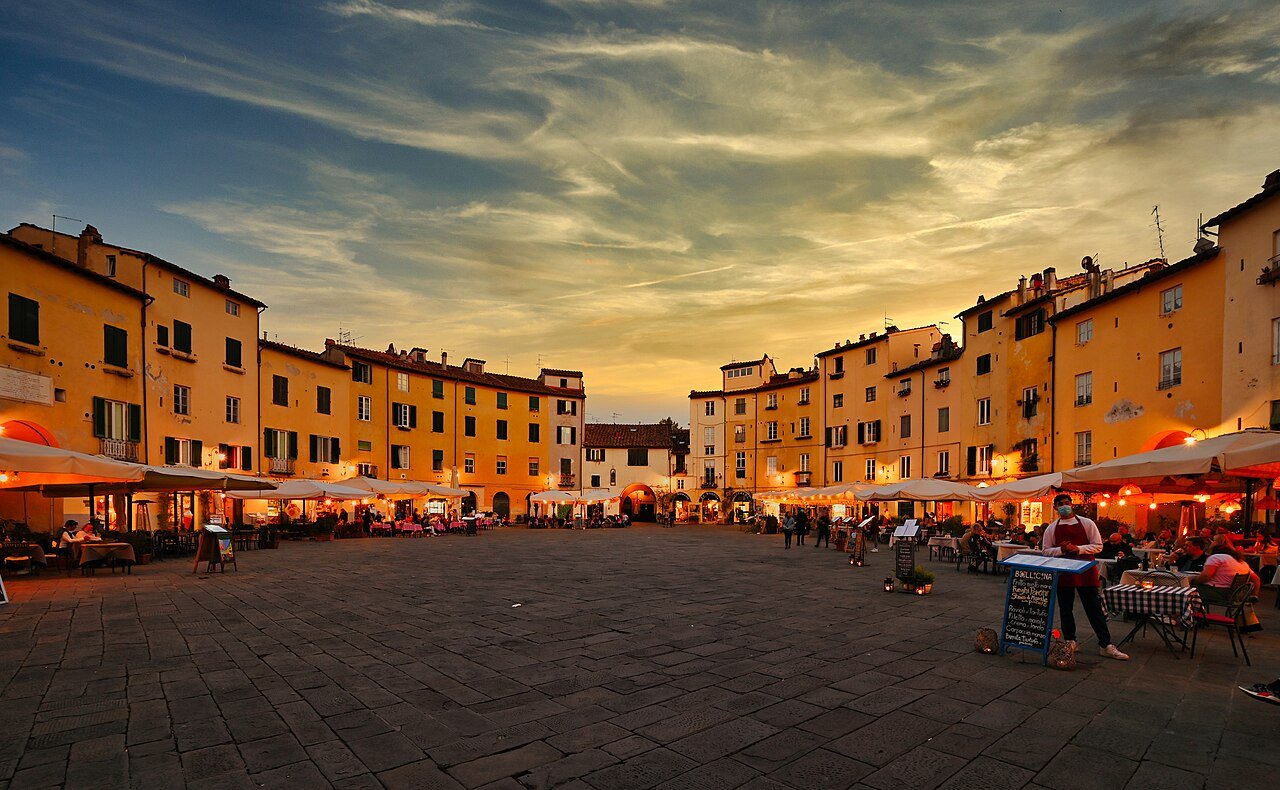
The Piazza dell'Anfiteatro is a ring of ordinary houses built into the footprint of the Roman amphitheatre, so the square they enclose is an oval. You enter it through low tunnels where the arena passages were. It is a completely accidental piece of urban design and it works perfectly.
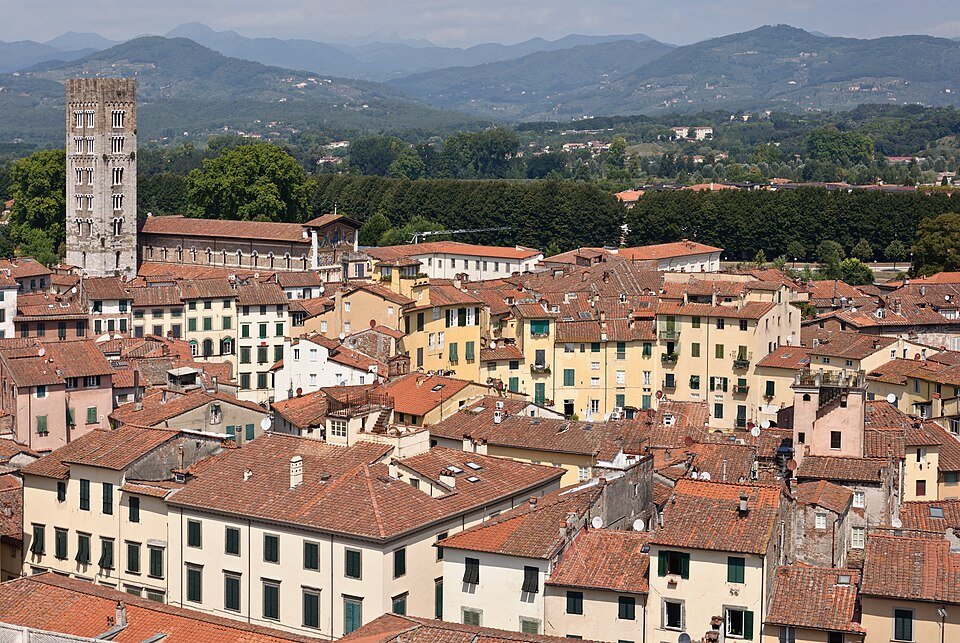
The Torre Guinigi has full-grown oak trees on its roof — planted centuries ago in a garden at the top of the tower — and can be climbed.
Lucca was a rich silk city and it kept an unusual number of churches for its size. San Michele in Foro and the cathedral of San Martino are both worth going in.
Getting there
Direct trains from Florence run roughly twice an hour and take about an hour and twenty minutes. The station sits just outside the walls, a few minutes' walk from a gate.
⭐ Lucca and Pisa are twenty-five minutes apart on the same line, so the two can be combined into one long day — Pisa in the morning, Lucca in the afternoon, back to Florence in the evening.
Of all the towns on this list, Lucca is the easiest to spend an unplanned day in.
⭐ Rent a bike at a gate and ride the walls first. Everything else in Lucca makes more sense once you have seen the shape of it from above.
Lucca in pictures