The steak, and what it actually is
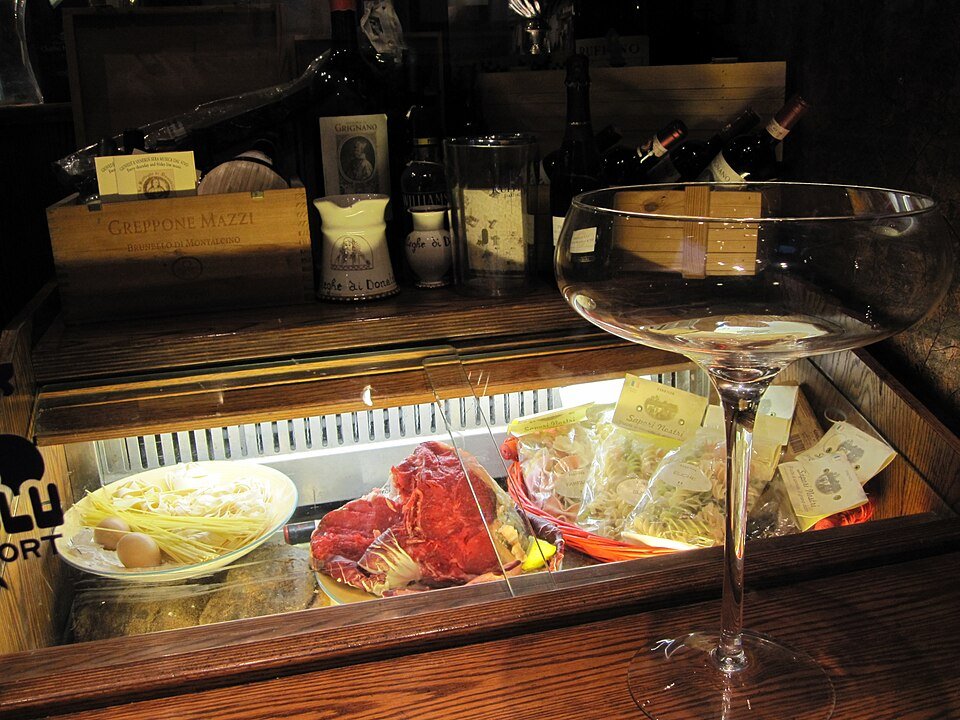
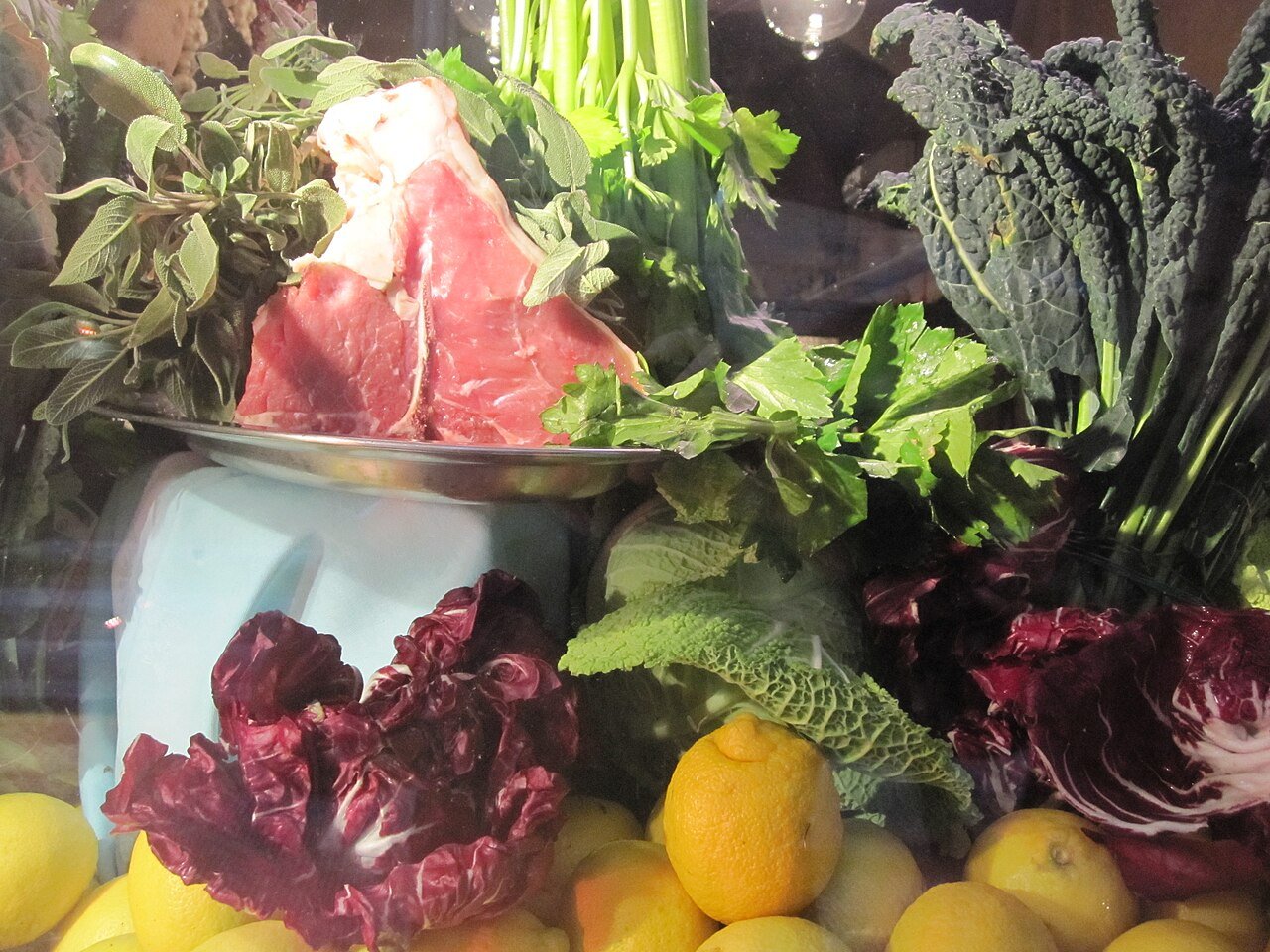
Bistecca alla fiorentina is a T-bone from Chianina cattle — a very large, very old white breed from the Val di Chiana — cut at least two fingers thick, grilled over wood coals, and served rare. Not medium-rare. Rare, and if you ask for it cooked through you will be talked out of it, or served something else.
It is priced by weight, usually per hundred grams or per kilo, and a single steak routinely weighs more than a kilo. That is not a portion for one person; it is ordered for the table and carved. ⚠️ This is the most common way visitors are surprised by a bill in Florence — not because anything was dishonest, but because a steak was ordered per person.
It arrives with no sauce, usually with white cannellini beans dressed in oil, or with cavolo nero. That is the whole dish, and it is the point.
Eaten standing up
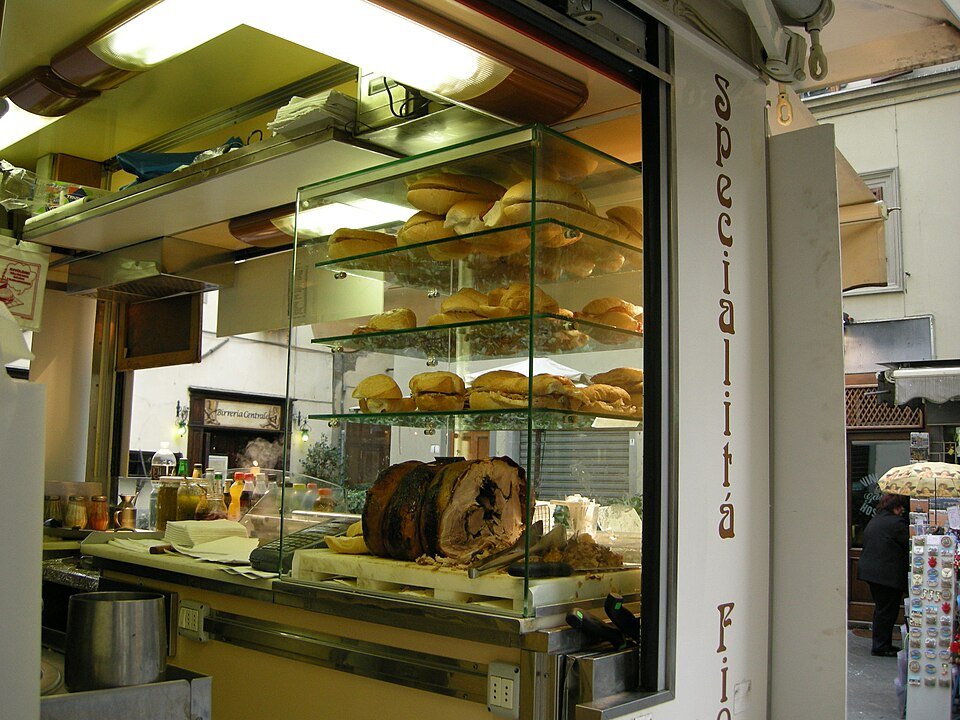
The city's real street food is offal, and it is very good. Lampredotto is the fourth stomach of the cow, simmered for hours, chopped, and pushed into a bread roll whose top has been dipped in the cooking broth, with green salsa verde and often a chilli oil. Trippa alla fiorentina is tripe stewed with tomato, eaten from a paper tray.
Both come from a trippaio — a cart or a hole-in-the-wall stand, not a restaurant. You eat it on the pavement. There is one in or beside most of the markets and several in the streets around Sant'Ambrogio.
⭐ If offal is not for you, the same stands and the bakeries do schiacciata — flat, oily, salted bread split and filled. ⚠️ Note the word does double duty: schiacciata all'olio is that bread, while schiacciata alla fiorentina is a soft orange-scented sponge cake eaten at Carnival, dusted with sugar and stamped with the city's lily.
The sandwich, which is its own institution
Florence is a sandwich city, and the queues are the proof. The bread is schiacciata — flat, oily, salted, split while still warm — and it is filled with whatever the shop cures and makes: finocchiona and other salumi, pecorino, roast pork, and the spreads that do the real work, above all crema di carciofi (artichoke), truffle cream, and stracchino cheese.
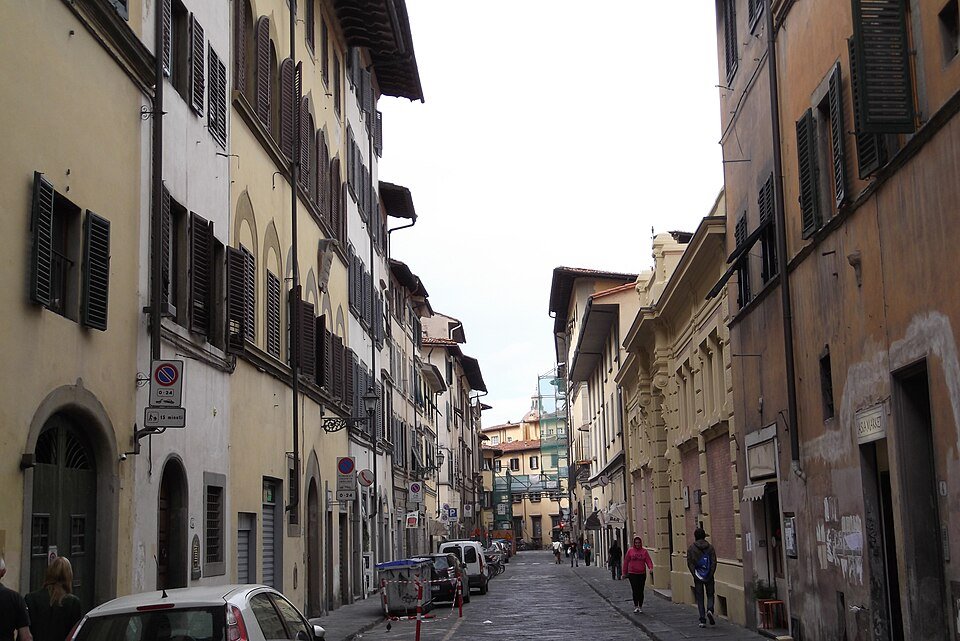
⭐ Via de' Neri, running east from behind the Palazzo Vecchio, is the street this is associated with, and at lunchtime the queue outside the best-known shop there runs along the pavement. It moves quickly, and there are several good ones on the same short street with no queue at all.
The other sandwich is lampredotto in a roll from a trippaio cart — the older, cheaper and more Florentine of the two. Between them they are how most of the city eats at midday, standing up, for a fraction of what a sit-down lunch costs.
⚠️ These are takeaway counters, not restaurants. There is nowhere to sit, no service, and no coperto — you take it and eat it on a step or a wall.
Bread with no salt, and what it is for
Tuscan bread is made without salt, which startles people who eat a slice on its own. It is not meant to be eaten on its own. It is a structural ingredient, and half the regional repertoire is built out of yesterday's loaf.
Ribollita — literally 'reboiled' — is a thick soup of cavolo nero, beans and bread, cooked, left, and cooked again. Pappa al pomodoro is bread and tomato cooked to a purée. Panzanella is a summer salad of soaked bread, tomato and onion. Crostini neri — chicken-liver pâté on toast — start almost every traditional meal in the city.
The markets, and their hours
Mercato Centrale in San Lorenzo is the big nineteenth-century iron-and-glass hall. ⚠️ The ground floor is the real market — butchers, fishmongers, cheese, vegetables, tripe counters — and it works to market hours, finishing in the early afternoon. The upper floor is a modern food hall aimed at visitors and stays open far later. Both are worth going to; they are not the same experience.
Sant'Ambrogio, east of the centre, is smaller, less visited and where a good many Florentines actually shop. Monday to Saturday, mornings.
⭐ Come before lunch if you want the market. After two o'clock you are looking at a food court.
Wine, and the windows in the wall
You are in Chianti, and the house red poured from a jug in an ordinary trattoria is usually the right order. Vin santo with hard almond cantucci to dip in it is the standard end of a meal.
Set into the stone of palazzo walls all over the centre are buchette del vino — small arched hatches about a foot high, through which wine was sold straight out of the cellar from the sixteenth century onwards. Several have started serving again. They are at eye level on ordinary streets and most visitors walk past every one of them.
Mechanics worth knowing
⚠️ Coperto is a per-person cover charge and it is normal and legal; it is listed on the menu. It is not a tip, and it is not a scam.
⚠️ Standing at a bar counter and sitting at a table can be different prices for the same coffee. Again, normal, and posted.
⭐ Lunch in a working trattoria is often the same kitchen as dinner for less money and with no reservation. Many close between lunch and dinner entirely.
⭐ Piazza Santo Spirito and the streets around it, across the river, are where a large part of the city eats and drinks in the evening — and it is four minutes' walk from the Ponte Vecchio in the direction most visitors never take.
⭐ One steak between two or three people, ordered by weight, plus beans and a jug of the house red, is the classic Florentine meal and it is not an expensive one.
Florentine food in pictures