Why there are towers
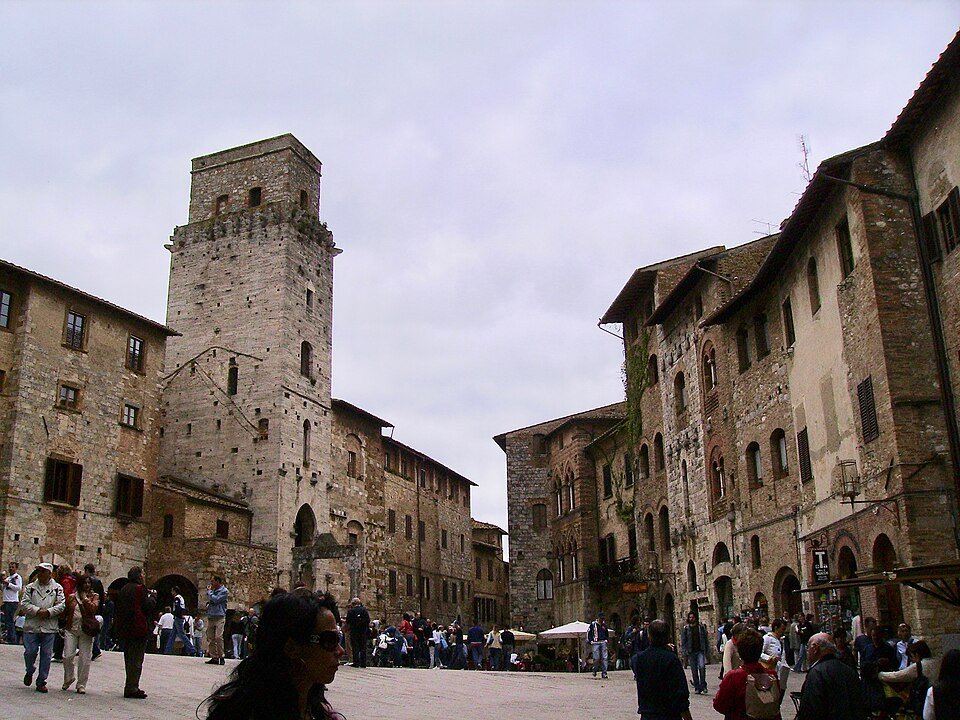
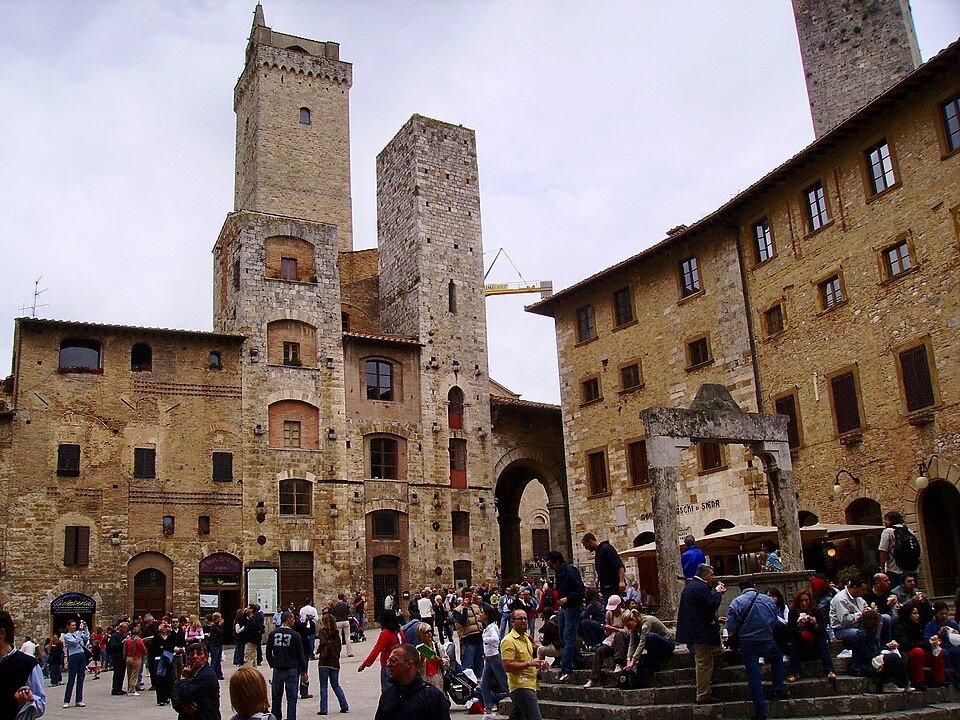
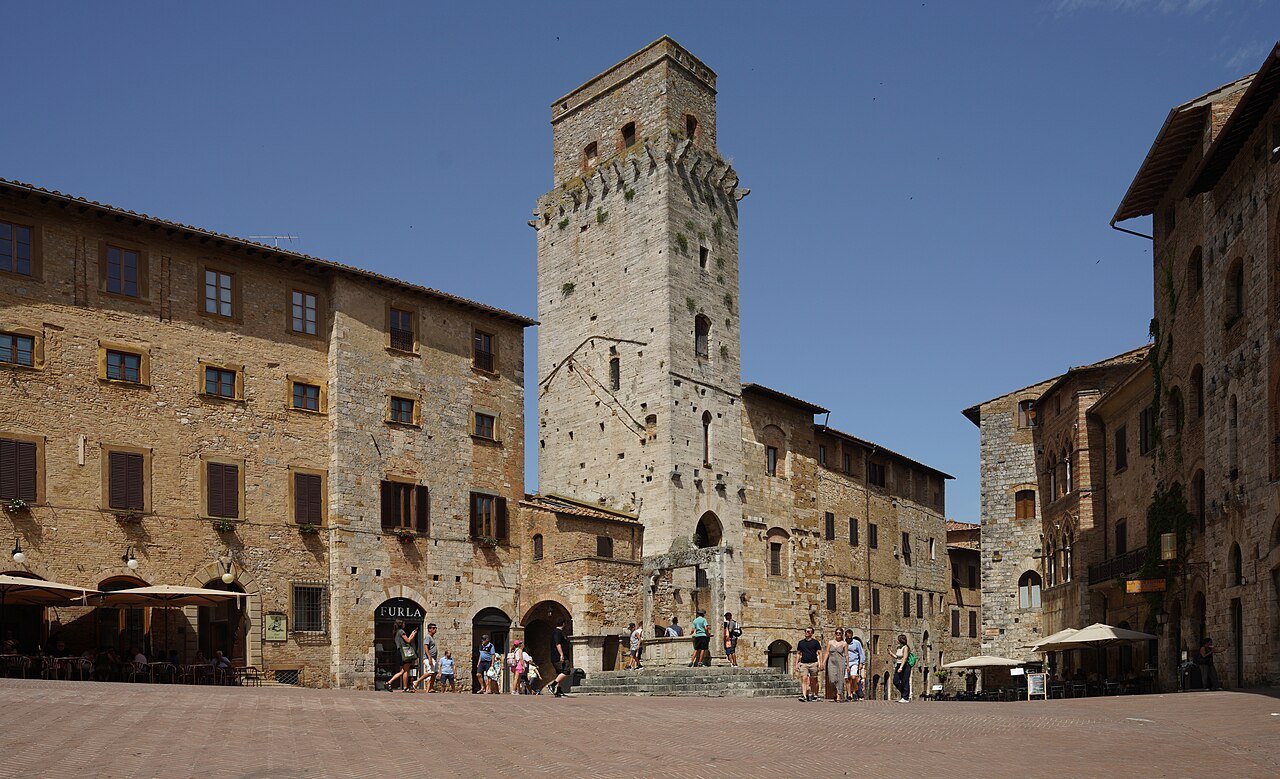
In the twelfth and thirteenth centuries the town's leading families built tower-houses as fortified homes and as straightforward displays of wealth — each one trying to be taller than the next, until the commune passed a law forbidding any tower to exceed the height of the one on the town hall.
There were around seventy-two. Fourteen survive, and they survive for the same reason Siena's cathedral was never finished: the plague of 1348 and the collapse of the town's economy. San Gimignano stopped being important, and a place that stops being important does not knock its old buildings down.
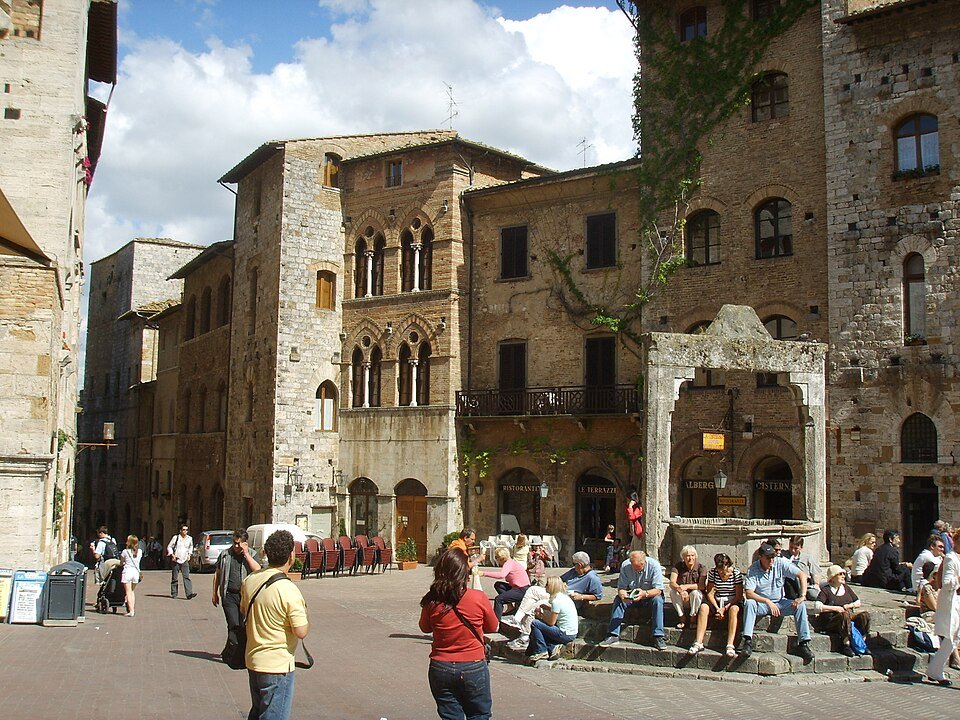
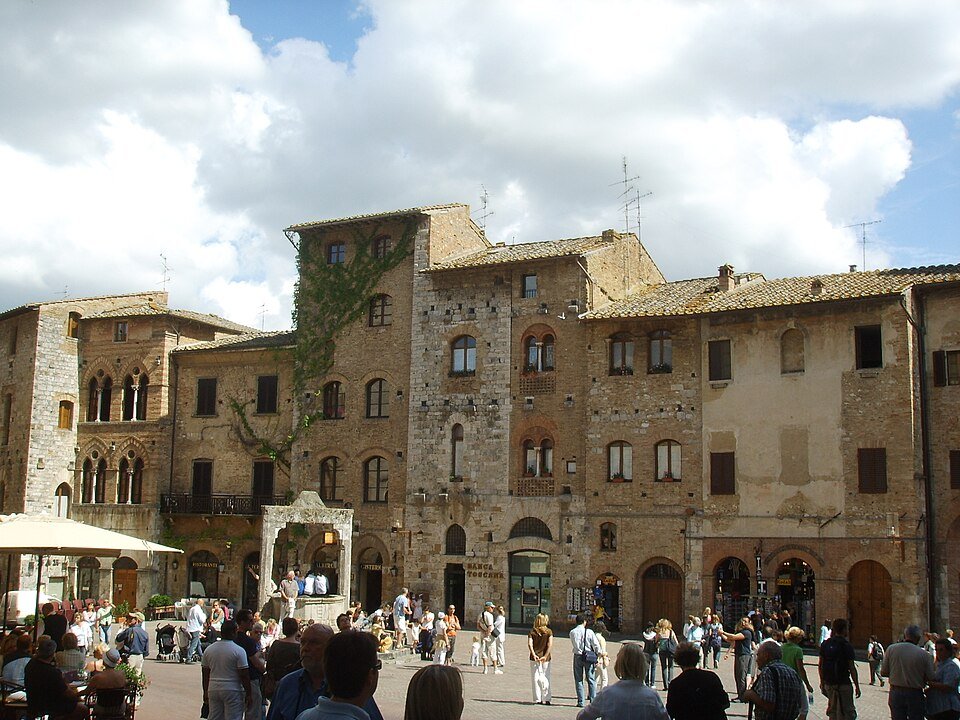
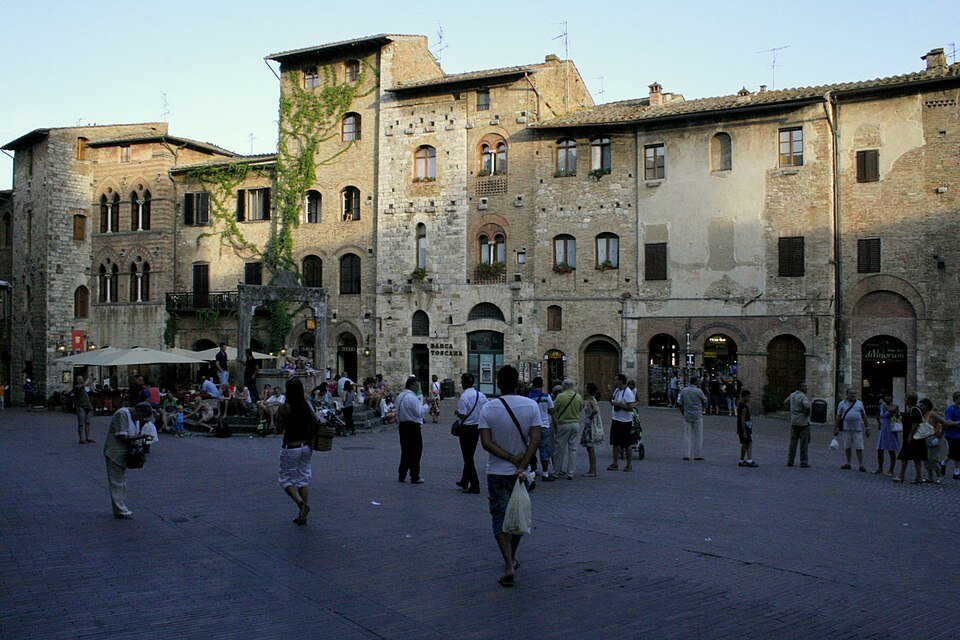
Piazza della Cisterna, with the well in the middle, and the Collegiata with its fresco cycles are the two things to see beyond the skyline itself.
It is small, and it empties
This is a two-hour town, not a full day. It is also the most coach-dependent place on this list, which means it is extremely busy from mid-morning until late afternoon and then almost empty.
⭐ If you can arrive early or stay late, do. The difference is dramatic.
⚠️ Getting there is the hard part
There is no railway station. The usual public-transport route is a train from Florence to Poggibonsi and then a connecting bus up the hill, which makes it the most awkward of these trips to do independently — roughly two hours each way with the change.
That is why San Gimignano appears on almost every organised Tuscany tour, usually paired with Siena and a Chianti winery. If you are not driving, a tour is a reasonable way to do this particular town.
⚠️ Check the bus timings before committing. The connection, not the train, is what determines whether the day works.
⭐ Combine it with Siena rather than doing it alone — the two are close, and San Gimignano does not fill a day on its own.
San Gimignano in pictures