A political exile who wrote a poem
Dante was a Florentine of the governing class, and Florence in his lifetime was tearing itself apart between factions. He served as one of the city's priors, backed the losing side, and in 1302, while he was away, was condemned in his absence: perpetual exile, and if he returned, to be burned alive.
He never returned. He wrote the Commedia in exile, in Italian rather than Latin — which is why Italians read a poem written seven hundred years ago without a translation, and a large part of why modern Italian sounds the way it does. He filled it with Florentines, and put a good many of his enemies in hell by name.
He died in Ravenna in 1321 and Ravenna still has his body. Florence has asked. Florence continues to ask.
The empty tomb, and the statue
Inside Santa Croce there is a large and dignified tomb for Dante with nothing in it — a cenotaph raised in the nineteenth century for a man the city had sentenced to death and could not get back.
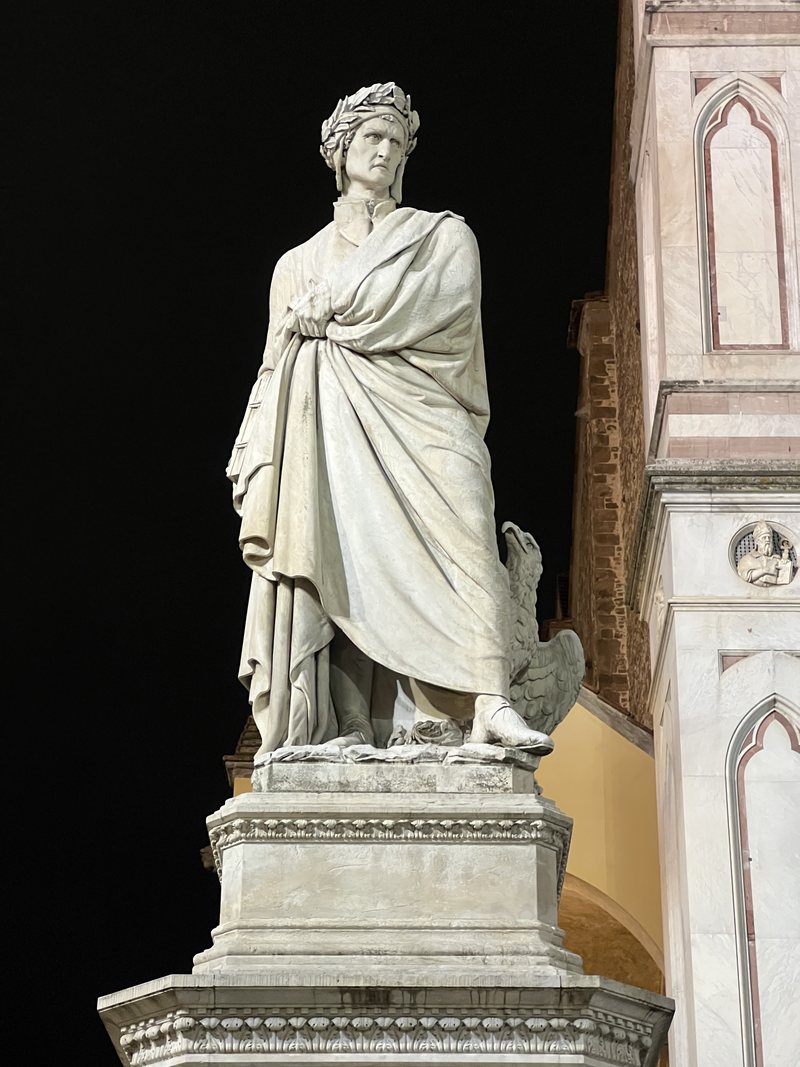
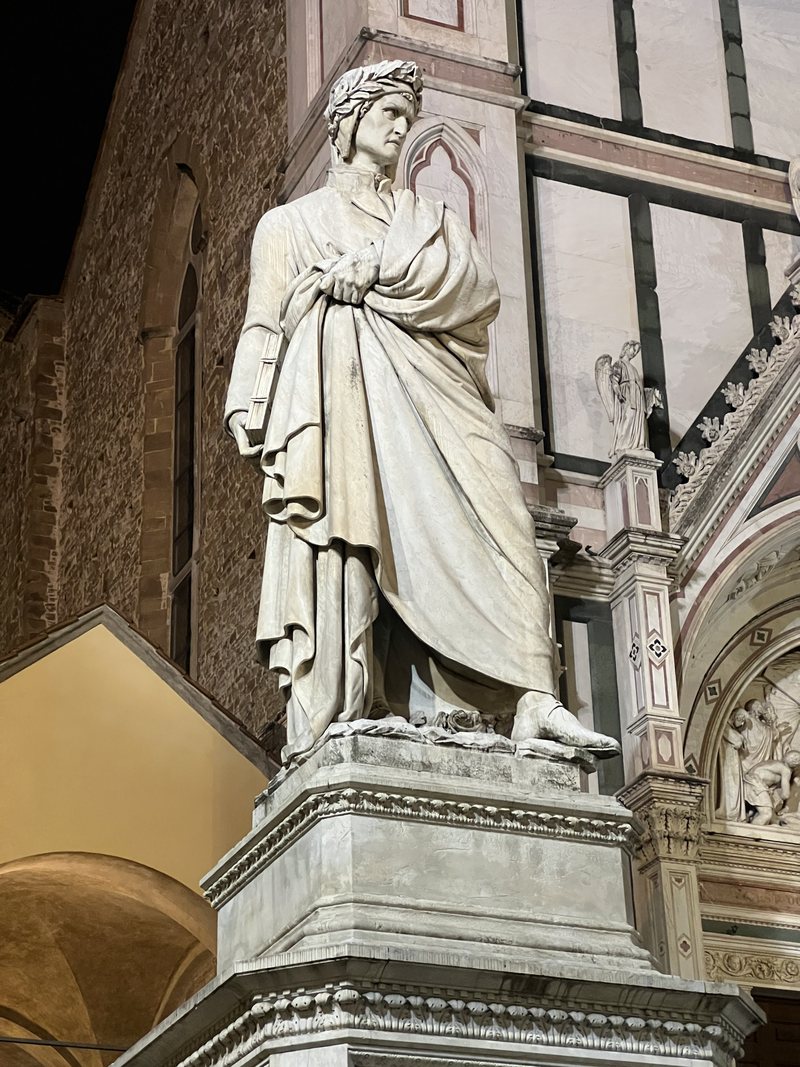
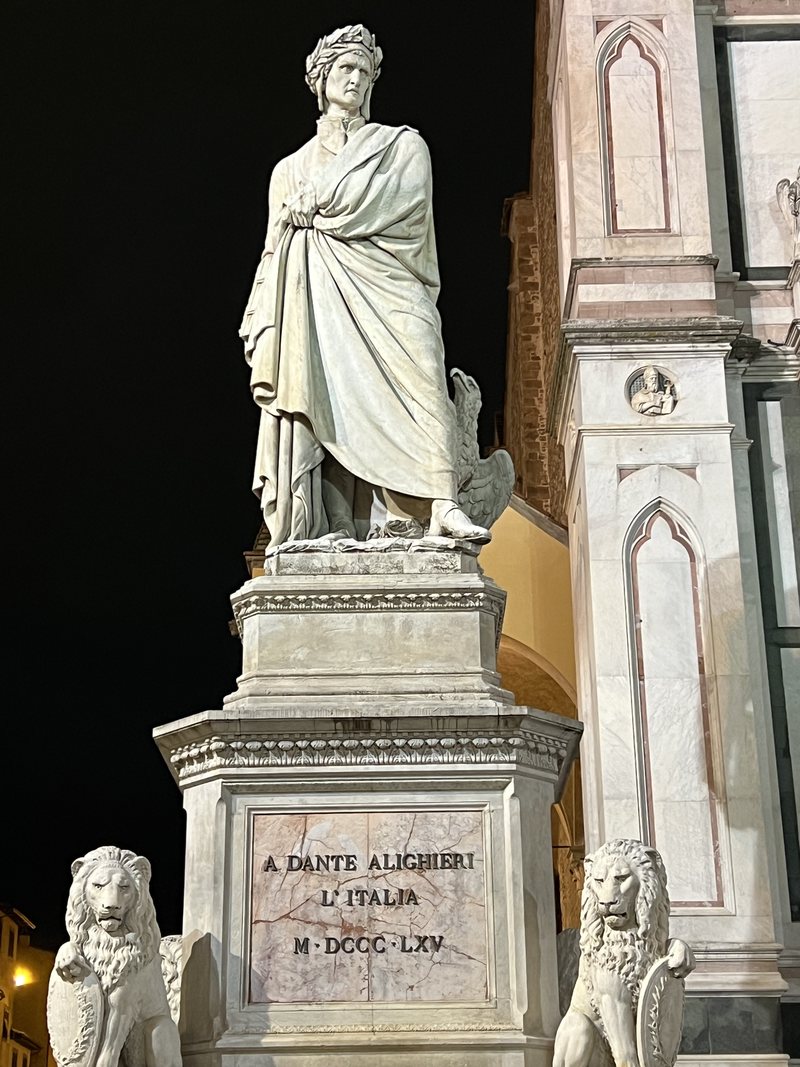
Outside, on the steps, is Enrico Pazzi's statue, carved in 1865 for the six hundredth anniversary of his birth, in the year Florence was briefly the capital of a newly united Italy. Dante stands with a laurel wreath, an eagle at his feet, and an expression that has been described as unimpressed.
⚠️ It has not always stood there. It was placed in the middle of the square, and moved to the steps of the church in 1968 — so that the Calcio Storico could be played in the piazza without a poet in the way.
Where to meet him in the city
The Baptistery is il mio bel San Giovanni in the poem — he was baptised there, and he mentions it with an affection he does not extend to the rest of the city's institutions.
In the cathedral hangs Domenico di Michelino's painting of Dante holding the Commedia, with hell on one side, purgatory behind him and Florence — the actual, recognisable city, dome and all — on the other. It was painted in the century after his death, by a city that had come round.
The Casa di Dante, near the Badia, is a museum rather than his house; the building is a reconstruction of the right period in roughly the right place.
Exiled on pain of being burned alive. Buried in Ravenna. Commemorated here with an empty tomb.
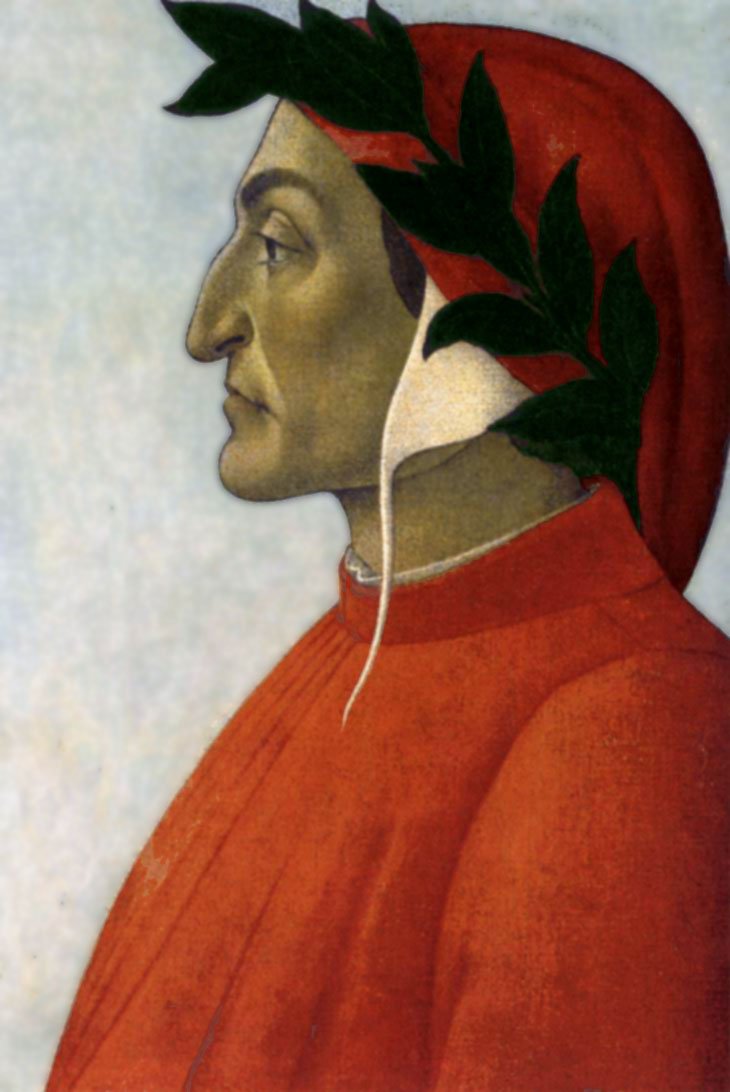
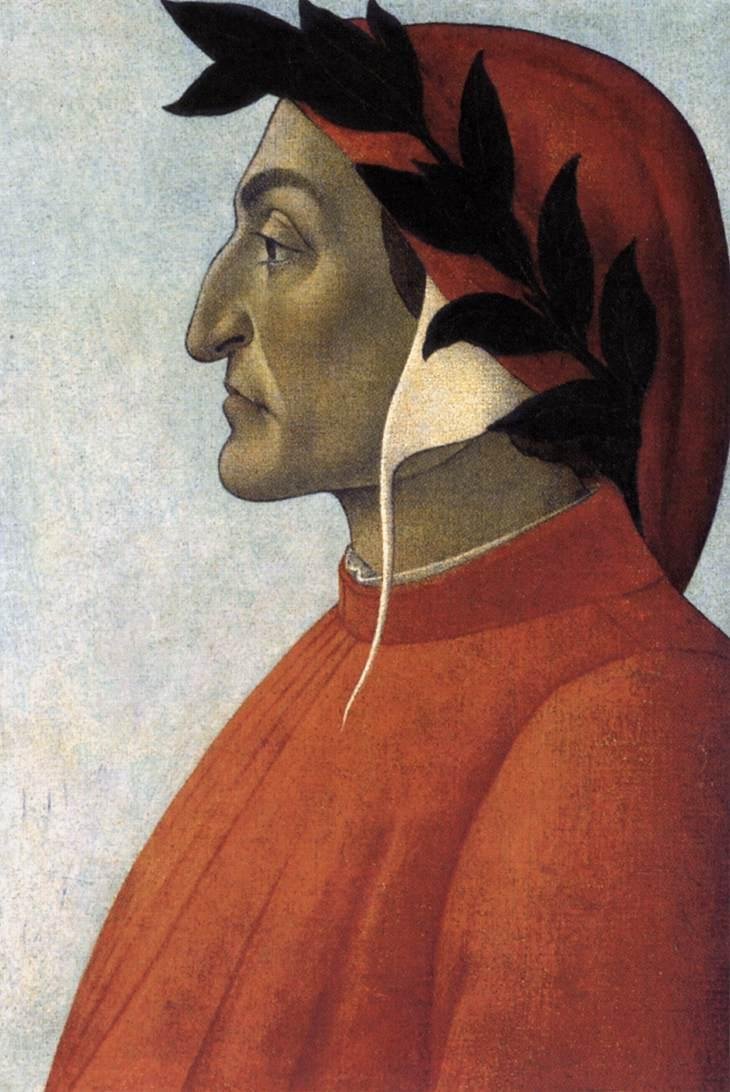
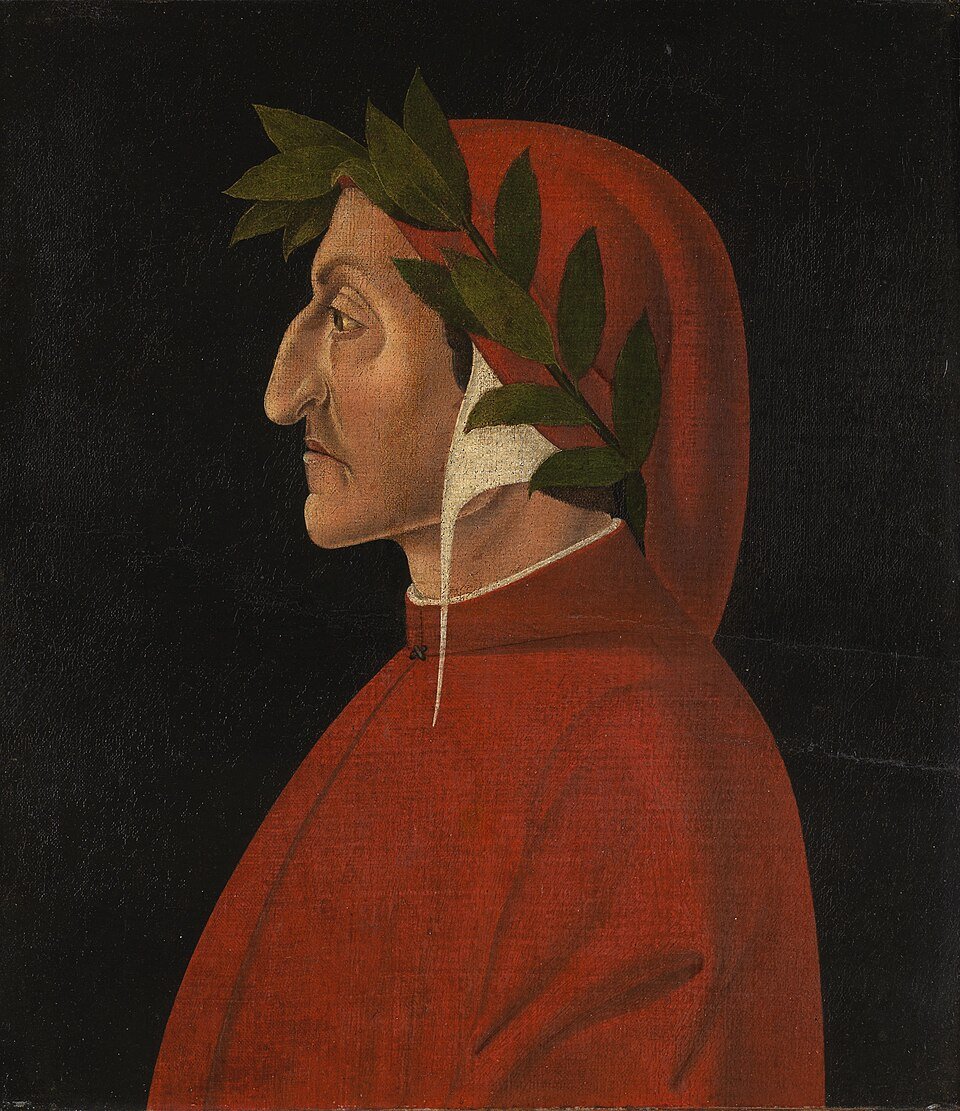
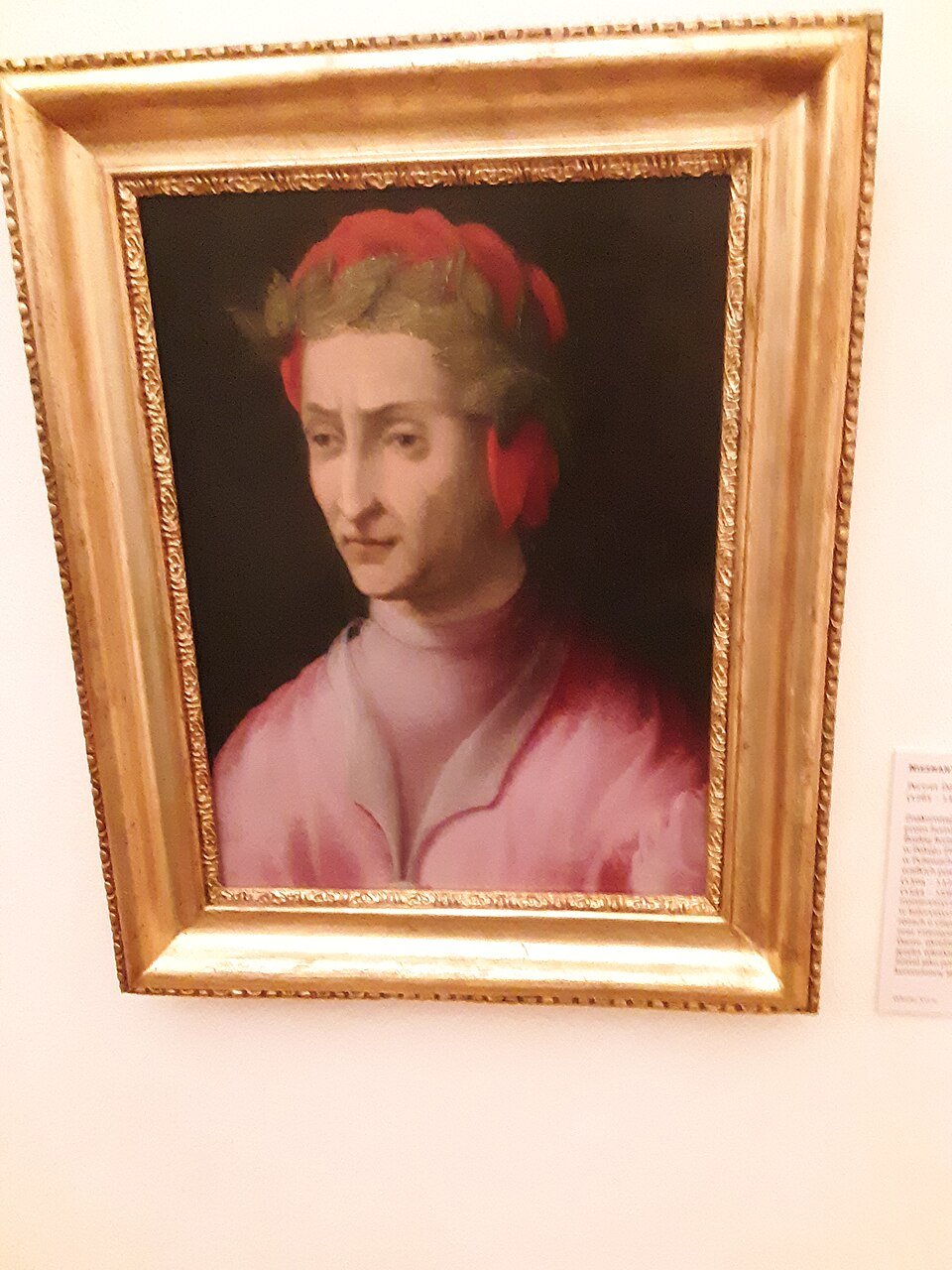
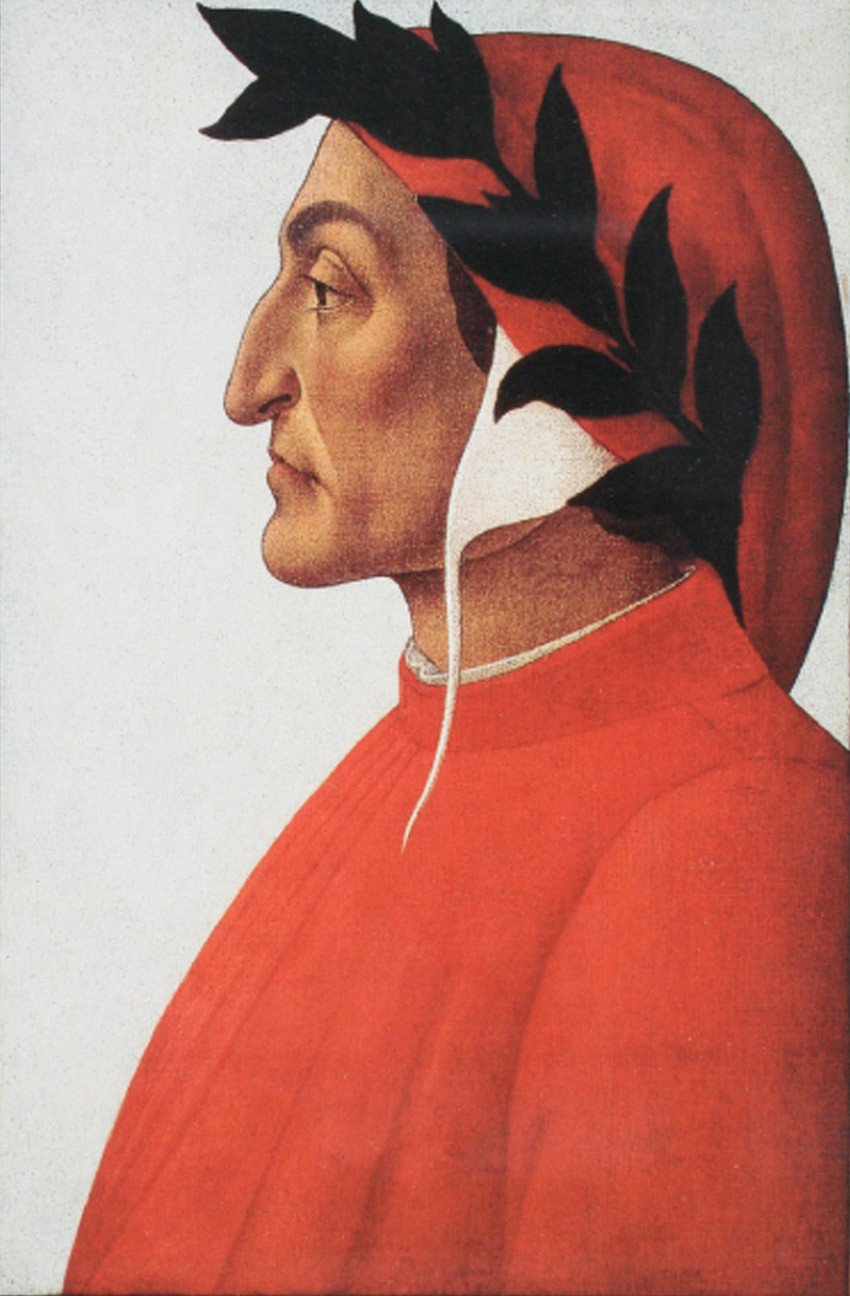
Dante Alighieri in pictures