Power without a title
The Medici were bankers. The Medici Bank, run out of Florence with branches across Europe, made them the richest family in the city and eventually the papacy's bankers — and their power in Florence was, for a century, entirely informal. There was no Medici throne. There were elections, councils and priors, and there was a family that decided the outcome.
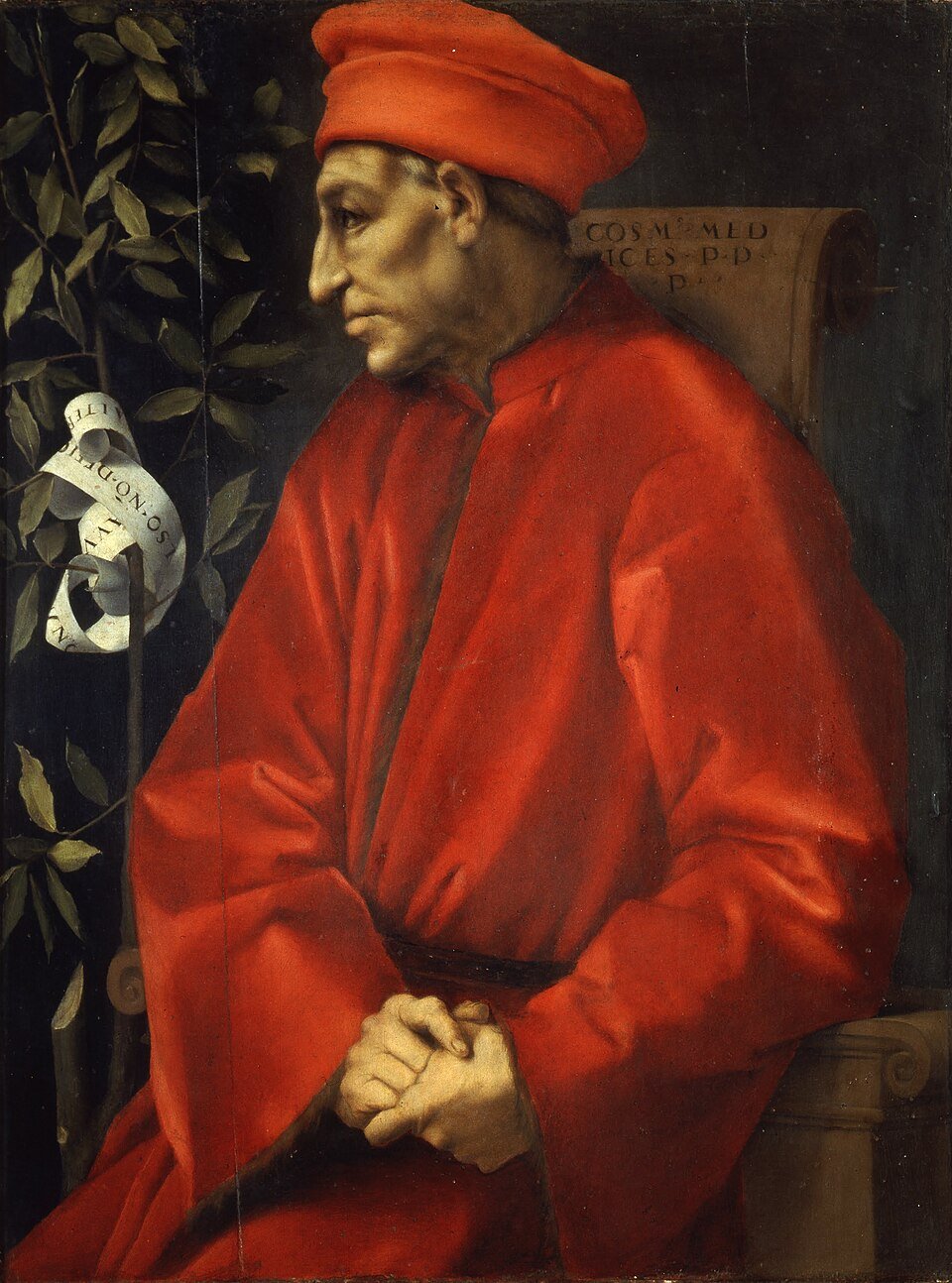
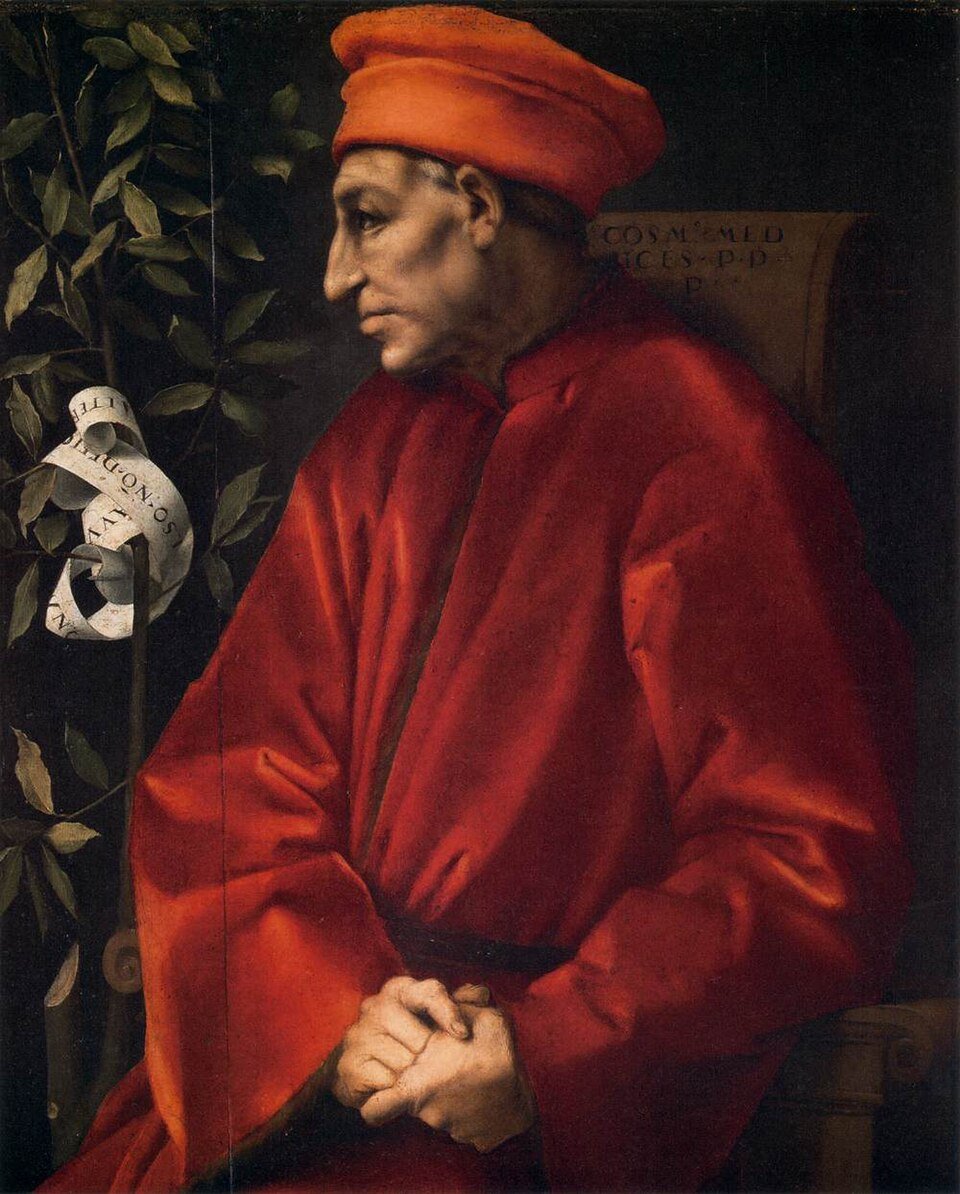
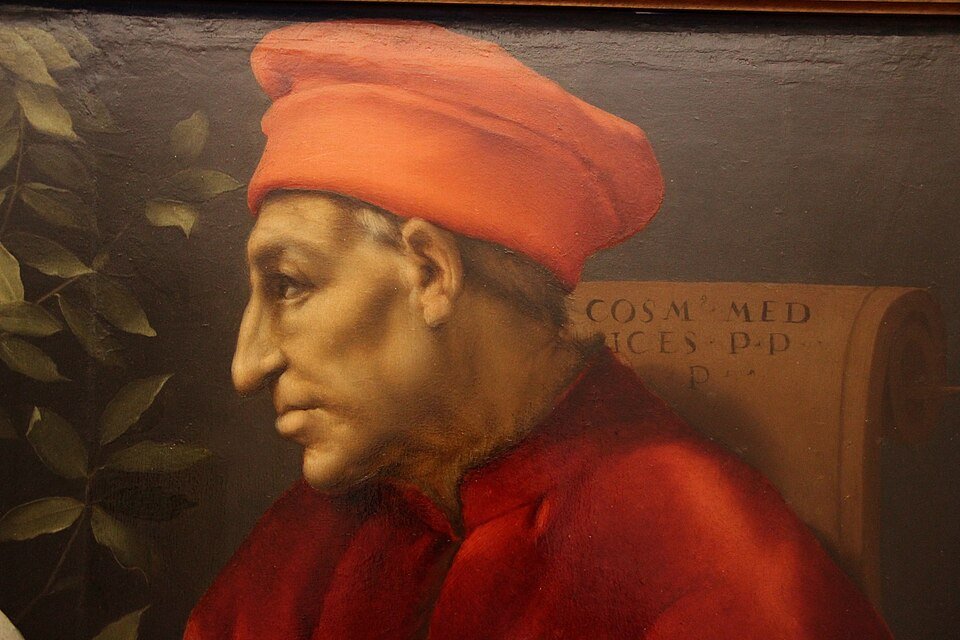
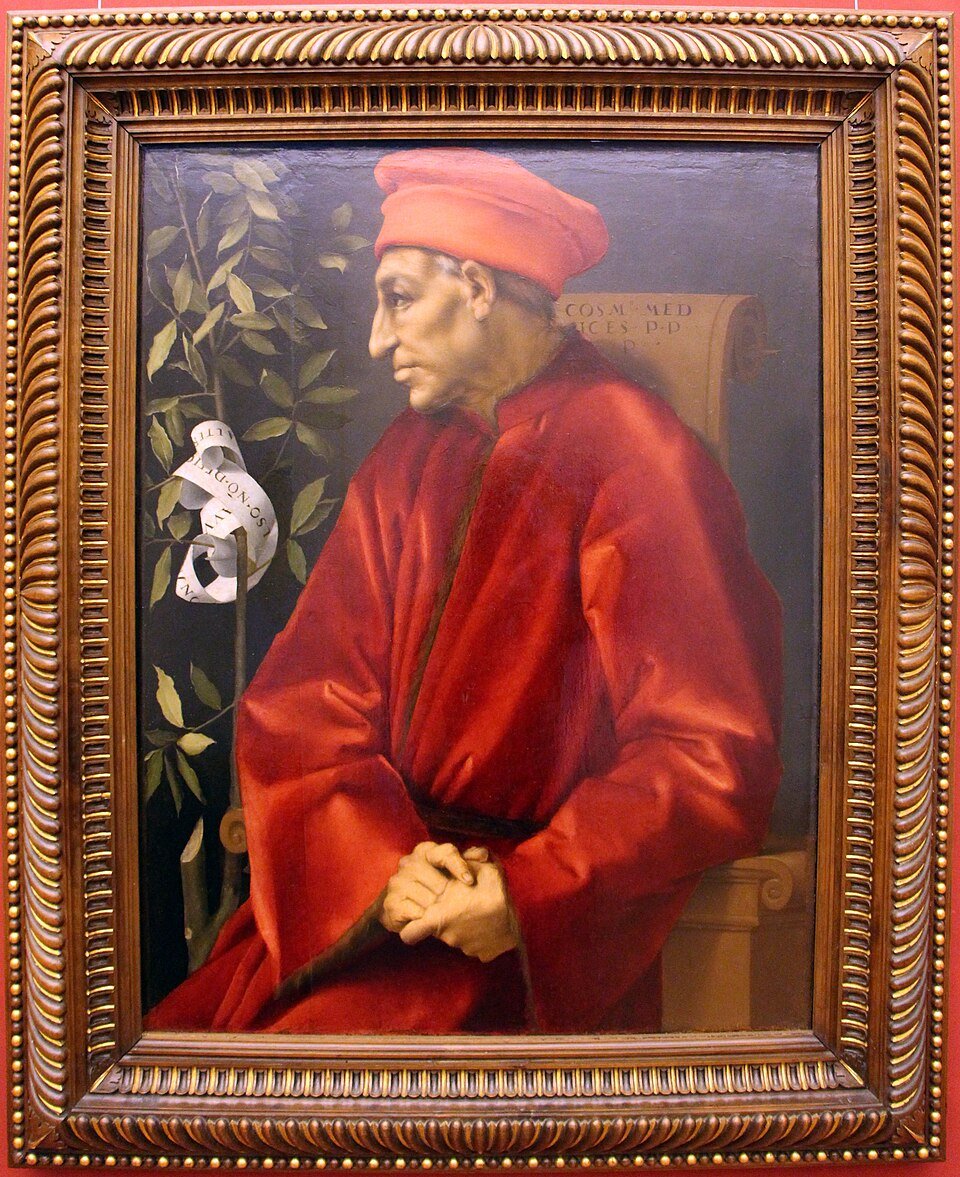
Cosimo de' Medici, later called il Vecchio, was exiled by rivals in 1433 and recalled in 1434 — after which nothing in Florence happened against his wishes. He held almost no office. He paid for the buildings, he lent to the people who mattered, and he decided which names went into the bags the officials were drawn from.
His grandson Lorenzo il Magnifico inherited the arrangement and the patronage that came with it. The family later produced popes, two queens of France, and eventually — once the pretence of a republic was abandoned — the Grand Dukes of Tuscany.
⭐ Cosimo, Francesco Sforza, and the peace that held
This is the part of the story that is usually left out of a guidebook, and it is the most interesting thing the family ever did.
Francesco Sforza was a condottiere — a mercenary commander — with a claim on Milan through his marriage into the Visconti. In 1434 he made a pact with Cosimo, who paid him a substantial subsidy and had him appointed condottiere of Florence. Florence's traditional ally was Venice; Cosimo was backing the man Venice would have to fight.
It was an unpopular policy and Cosimo held to it. When Venice, Naples, Savoy and Montferrat combined against Sforza, he turned to Cosimo again, and the resulting Milan–Florence alliance brought about the Peace of Lodi, signed on 9 April 1454. Sforza kept Milan. Cosimo was the principal architect of the settlement.
What followed was the Italian League — Venice, Milan and Florence in mutual defence, with the Papal States and Naples joining the year after — and roughly forty years of balance between the five powers of the peninsula. The Renaissance you have come to Florence to look at was built in that window, and it was paid for by people who could plan more than one year ahead.
⭐ It is worth being plain about the mechanism: a Florentine banker decided who ruled Milan, and bought his own city four decades of peace by doing it.
What they left in the streets
Almost everything on this site is downstream of that money. The dome was finished under their influence; San Lorenzo is their parish church and their mausoleum; the Uffizi was built as their offices and holds their collection; Palazzo Pitti and Boboli were their home and garden; San Marco was rebuilt at Cosimo's expense.
The line ended in 1737 with Anna Maria Luisa, the last of the family, who left the entire Medici collection to the state of Tuscany on the condition that none of it ever leave Florence. It never has. That single clause is the reason the paintings are still here rather than distributed across the museums of Europe.
A Florentine banker decided who ruled Milan — and bought his own city forty years of peace.
⚠️ The other half of this story is in Milan — the castle Francesco Sforza rebuilt, and the duchy Cosimo's money secured for him.
The Medici in pictures