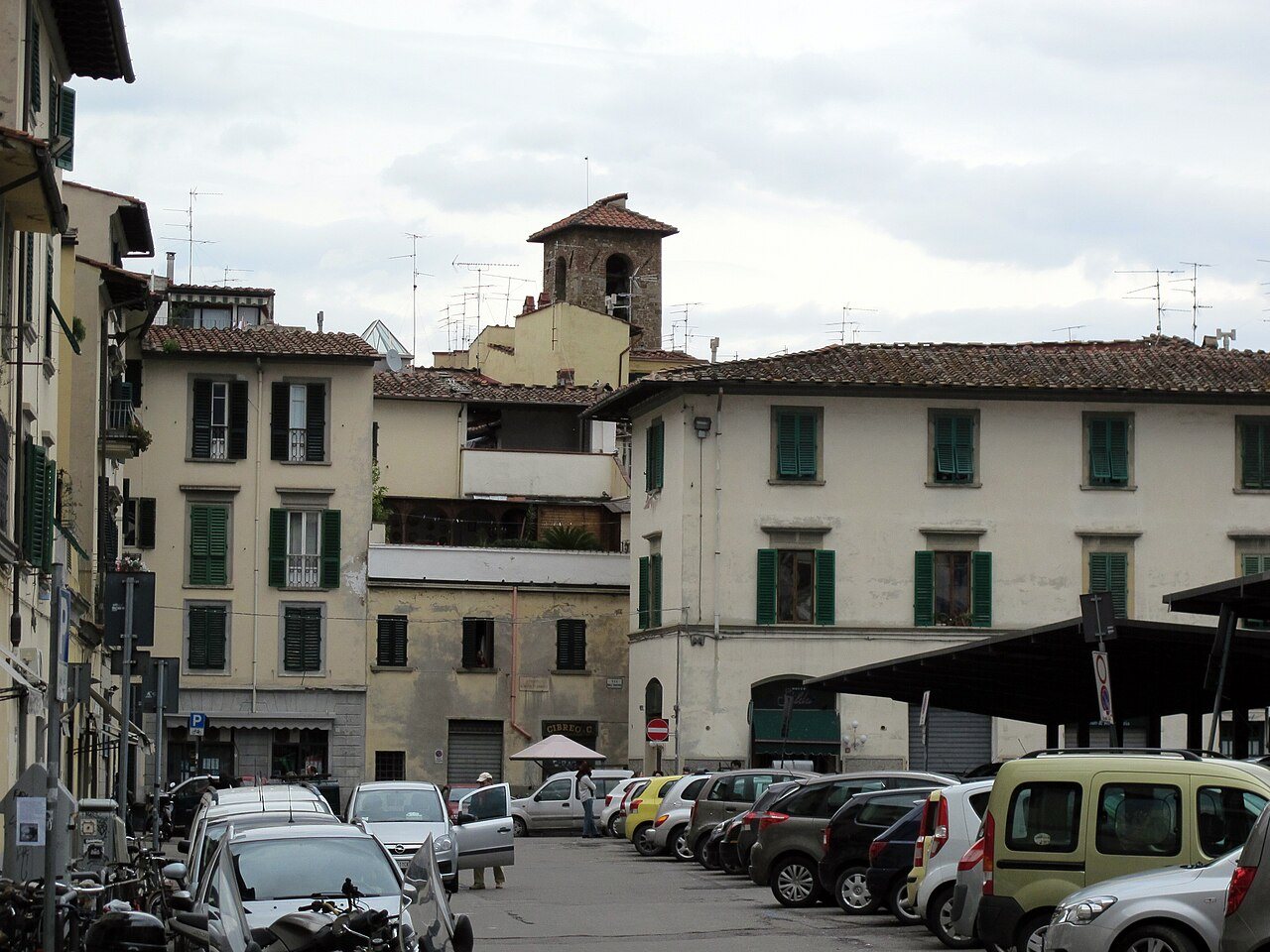
Sant'Ambrogio is what Florentines mean when they say "the market" without further explanation, the way they'd say "the river" and only mean the Arno. It sits a fifteen-minute walk northeast of Santa Croce, past the edge of the tourist grid, in a square that also hosts a loggia market hall and a cluster of bars that run on espresso and gossip. Nothing here is staged for visitors. That's the whole appeal, and also the reason first-timers sometimes wander in, see crates of chicory and a man shouting about artichokes, and wander back out without understanding what they just walked past.
This is a working market, not a photogenic recreation of one. It exists to feed the neighborhood, which means its rhythms are set by supply trucks, restaurant buyers, and elderly regulars who've shopped the same three stalls for decades, not by tour groups. Understanding how it actually operates is the difference between a frustrating half hour and a genuinely good morning.
Two markets, stacked on top of each other
Sant'Ambrogio is really two different markets sharing one square, and conflating them is the first mistake people make.
Inside the covered loggia — the iron-and-glass market hall on the square's edge — is the permanent structure: butchers, fishmongers, a trippaio selling tripe and lampredotto from a steel cart, cheese counters, a bakery, a handful of stalls selling dried pasta, olive oil, and preserved vegetables. These vendors operate daily, have fixed spots, and know their customers by name. The hall is small enough to cover in ten minutes but dense enough that you'll miss half of it unless you walk both aisles.
Outside, ringing the square and spilling into the surrounding streets, is the open-air stuff: produce stalls, a few clothing and household-goods tables, sometimes a stand selling plants or kitchen tools. This part is seasonal in flavor if not in schedule — the crates change with what's actually ripe, which in a city that still eats by season is more honest than it sounds. In late spring you'll see broad beans and the first artichokes; by autumn it's porcini and chestnuts if the woods behind the city have had a decent year.
⭐ If you only have time for one part, pick the covered hall. It's where the actual food culture lives, and it's sheltered if the weather turns.
Why mornings, and why it matters when you show up
A food market runs on a supply chain that starts before dawn and degrades as the day goes on. Fish arrives first and sells fastest, because nobody wants to be the vendor still holding yesterday's catch at midday. Produce gets picked over — the best tomatoes and the ripest stone fruit go early, and what's left by the time the day warms up is what nobody wanted first. Bakery stock doesn't get replenished once it's sold.
None of this means you need to arrive at some specific hour stated in a guidebook — the whole point is that the market itself sets the pace, not a clock. The mechanism to understand is simply this: come when stalls still have full crates and the vendors still have patience, not when they're breaking down tables and sweeping. Ask the market operator or your accommodation locally what's considered "still fresh" that day if you want a precise read, because it shifts with the season and even with the weather.
⚠️ Showing up right as vendors are packing up is the single most common disappointment here. People expect a market atmosphere all day, the way a souvenir strip operates, and instead find half-empty crates and stallholders counting cash. Sant'Ambrogio is not designed to perform for stragglers.
How to actually shop it, not just look at it
The market rewards people who treat it like a market, not a museum. That means a few concrete habits:
- Bring cash in small denominations. Many stallholders run on paper and a cash box, not card readers, and nobody wants to break a large note for a bag of lemons.
- Don't touch the produce. This is the one that trips up visitors from markets where handling fruit is normal. At Sant'Ambrogio, you point, you ask, the vendor selects. Squeezing tomatoes to test ripeness reads as an insult to their judgment, not a reasonable precaution.
- Buy small. You're very likely not cooking a full meal in a hotel room. A quarter-kilo of cherries, a wedge of pecorino, a couple of slices of schiacciata from the bakery counter — these are tasting quantities, and vendors are used to selling in small amounts to people clearly just passing through, as long as you're polite about it.
- Use your eyes before your words. Most stallholders speak enough English for a transaction, but pointing and a smile moves things along faster than a long explanation, especially when there's a queue of actual local shoppers behind you with their weekly list.
The lampredotto cart deserves its own mention. Lampredotto — the fourth stomach of the cow, slow-boiled and served in a bread roll, usually dressed with a green salsa verde and a sharper red chili sauce — is Florentine street food in its most unfiltered form, and the Sant'Ambrogio cart is one of the city's known reference points for it. It's an acquired category even among people who eat everything; order it the way regulars do, roll dipped in the broth, and don't ask too many questions about the ingredient list beforehand.
What's around it, and why that matters
Sant'Ambrogio's location is part of why it stays real. It sits outside the dense museum corridor that runs between the Duomo and the Arno, in a residential pocket where people actually live above the shops. That's also why it pairs naturally with a visit to Santa Croce, a ten-minute walk southwest — you can do the church and the tombs of Michelangelo, Galileo, and Machiavelli, then walk off the solemnity with the noise and produce crates of the market, or do it in reverse and carry your lampredotto roll toward the square outside Santa Croce to eat it sitting on the church steps, which is a perfectly normal thing to do here.
It's also the honest counterpoint to Mercato Centrale, the big glass-roofed food hall near San Lorenzo that's been rebuilt upstairs into a food court aimed squarely at visitors. Both are real markets with real vendors, but Mercato Centrale's upper floor has been designed for a tourist's schedule and tourist's budget, with longer hours and seating meant for lingering. Sant'Ambrogio hasn't been redesigned for anyone. If you want to see what a Florentine market looked like before anyone thought to monetize the atmosphere, this is closer to it.
For getting there and figuring out the walk from wherever you're staying, see getting here and around; for how this square fits into the wider pattern of Florence's neighborhoods beyond the historic center's main sights, neighborhoods has the broader context. And if the market whets an appetite for more structured eating and drinking around the city, food and drink picks up from here.
In pictures