Everyone comes to Florence knowing one sculpture: Michelangelo's David, marble, seventeen feet tall, in the Accademia. Almost nobody arrives knowing that a ten-minute walk away, in a squat medieval fortress that used to be a prison, sits a room with two other Davids in it — both bronze, both by different masters, both arguably more interesting to actually look at up close because you can walk all the way around them without a rope stopping you two feet short. That building is the Bargello, and it is the museum Florence forgets to tell people about.
A smaller building, a bigger payoff
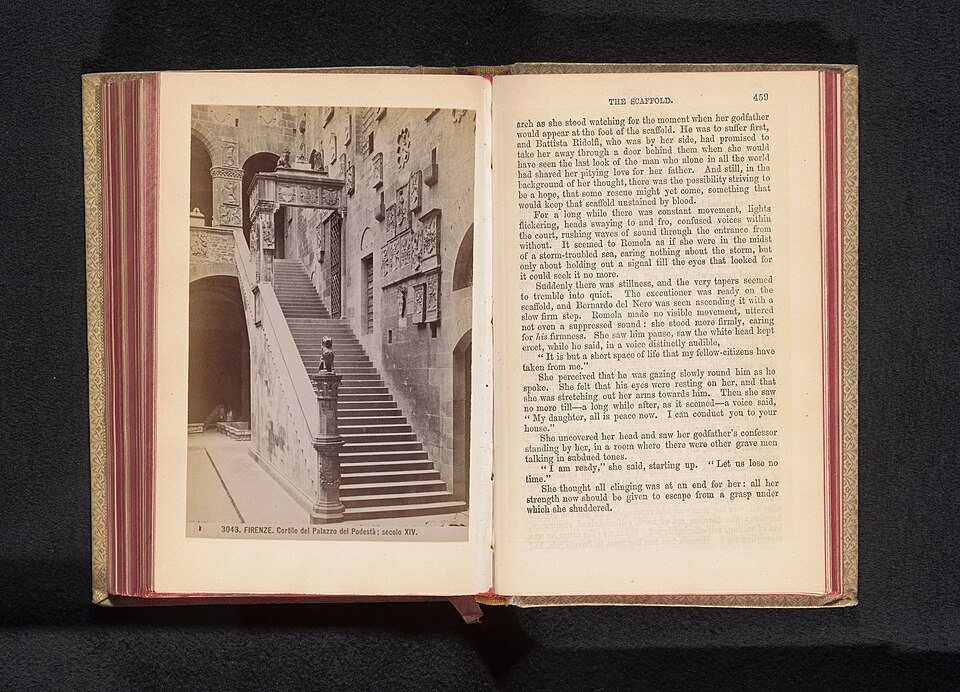
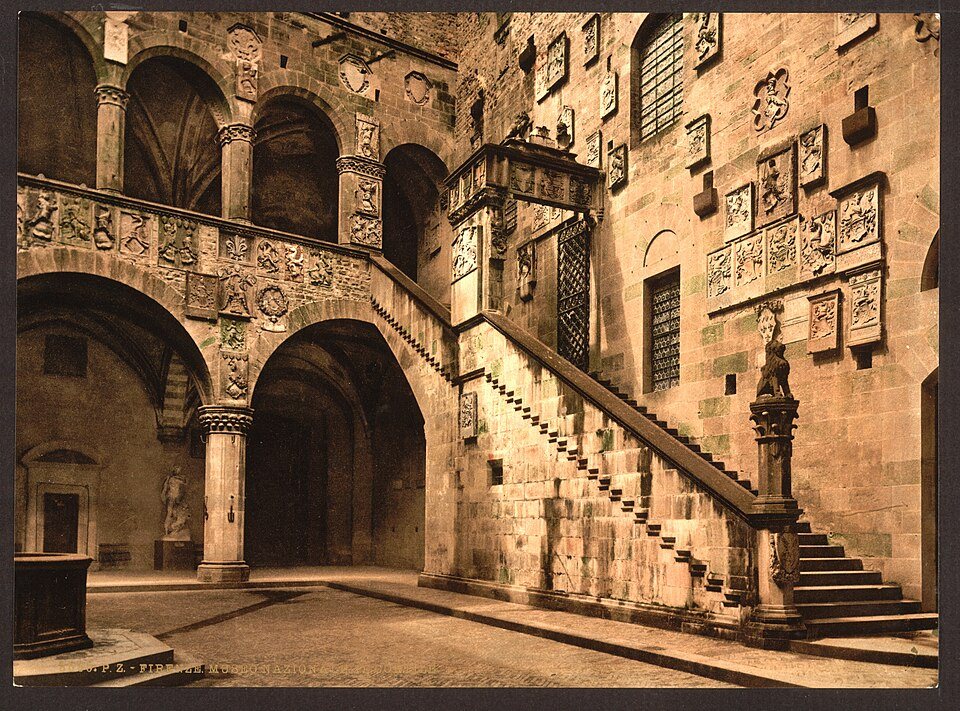
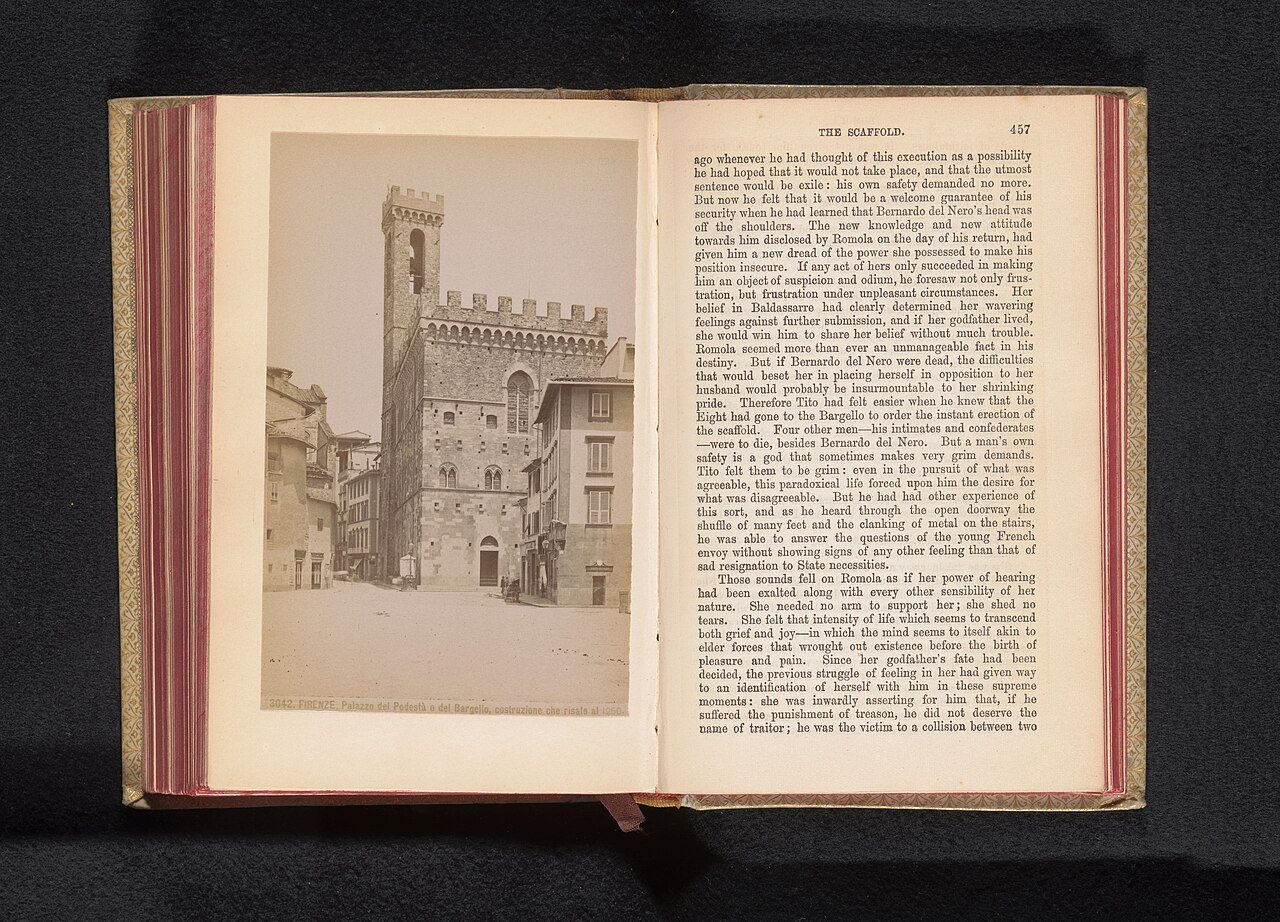
The Museo Nazionale del Bargello occupies the Palazzo del Bargello, a stone block of a building begun in the thirteenth century as the seat of the Podestà — Florence's chief magistrate, imported from outside the city specifically so he'd have no local loyalties to corrupt his rulings. Later the building became a prison and barracks for the city's police chief, the bargello, which is where the name stuck. Executions happened in the courtyard. Dante, tried in absentia by the government that met in this palazzo, was sentenced here in 1302 — read more on that at /dante/. None of that history is why people should visit today, but it explains the thick walls, the small windows, and the general sense that you've wandered into a building that was built to keep people in, not to show off.
In 1865, with Florence briefly serving as capital of a newly unified Italy, the building was converted into the country's first national museum, stocked largely with sculpture that had been sitting in Medici and church storerooms. That's the collection you see now: fewer rooms than the Uffizi, no single crowd-pulling icon, and as a result, room to actually stand in front of things.
What's on the walls — and why it matters
Start with Donatello. His bronze David, made sometime in the 1440s for the Medici, is the first freestanding nude statue since antiquity — a teenage boy in a plumed hat, foot resting on Goliath's severed head, doing nothing remotely heroic with his posture. It's strange and a little unsettling in a way the Accademia's marble giant, all civic muscle and resolve, simply isn't. Nearby is Donatello's marble St. George, moved here from its niche at Orsanmichele, and the Marzocco, the heraldic lion that became Florence's civic symbol.
Then there's Verrocchio's David, made a generation later, reportedly using a young Leonardo da Vinci as the model — a claim repeated often enough in guidebooks that it's worth treating as tradition rather than settled fact. Put the two Davids side by side in your head: Donatello's is androgynous and private, Verrocchio's is sharper and more self-possessed. That contrast, in one room, is the kind of thing you don't get standing in the queue for the Accademia's main event.
Michelangelo has a room too — his Bacchus, made in Rome as a young man and already unmistakably his, a drunk god swaying off balance in a way that later sculptors would spend careers trying to imitate. His Brutus and the Pitti Tondo, an unfinished marble Madonna and Child, are here as well, both worth the slow circle. Giambologna's Mercury, mid-flight on one toe, anchors another room and photographs better than almost anything else in the building.
The room that makes art historians linger: 1401
The single best reason to walk through the door, though, is a pair of bronze panels most visitors have never heard of before they see them. In 1401, the Florentine wool merchants' guild ran a competition to choose the sculptor for the north doors of the Baptistery. Entrants were given the same subject — the sacrifice of Isaac — and the same format, a quatrefoil frame, and told to make their case. Lorenzo Ghiberti won. Filippo Brunelleschi, who lost, went on to sulk his way into architecture and eventually built the dome that now defines the skyline — see /brunelleschis-dome/. Both competition panels survive, and both are here, mounted next to each other, so you can do exactly what the judges did six centuries ago: compare them directly and decide who you'd have picked. It's the rare museum moment where the object in front of you is also the argument.
Why the queue mechanics are so different from the Accademia's
The Accademia's line exists because of one object: everyone wants the same photo of the same David at the same time, and the building holding it is small. The Bargello has no equivalent single draw pulling in coach groups, which means the whole experience of moving through it is different — you're not queuing to reach one room and then leaving, you're moving at your own pace through several.
⭐ Because there's no marquee attraction forcing a crowd, the Bargello is one of the few major Florence sights where showing up without having planned six weeks ahead still tends to work out. That said, entry is still managed through the same reservation mechanism used across the city's state museums, and it's worth booking a slot the same way you would for the Uffizi or Accademia — see /booking-and-tickets/ for how that system works and how to reserve directly with the museum rather than through a markup reseller.
⚠️ The Bargello, like several state museums in Florence, closes on a rotating schedule that isn't the same every week of the month — check the museum's own calendar before you build a day around it, rather than assuming it follows the same pattern as the Uffizi or Accademia.
Practical notes for a first visit
- Give yourself an unhurried hour rather than a rushed twenty minutes — the building is compact, but the competition panels and the two Davids both reward standing still.
- The courtyard alone, lined with coats of arms of past magistrates, is worth photographing before you head upstairs — the light there is better in the morning.
- Pair it with a walk to Piazza della Signoria afterward — much of what happened inside this building's judicial history played out publicly there, including the eventual fate of Savonarola.
- If you're building a sculpture-focused day, the Bargello sits naturally between the Duomo complex and the Uffizi — see /itineraries/ for how to sequence it without doubling back across town.
None of this is an argument against seeing Michelangelo's David — go see it, it's worth the wait. It's an argument for not treating the Accademia as the only sculpture stop that matters. The Bargello is smaller, quieter, and in the room with the 1401 panels, arguably more useful for understanding how the Renaissance actually started — as a competition between two young men, judged on the spot, with real consequences. For more on where sculpture and painting sit across the city, see /museums/.
In pictures