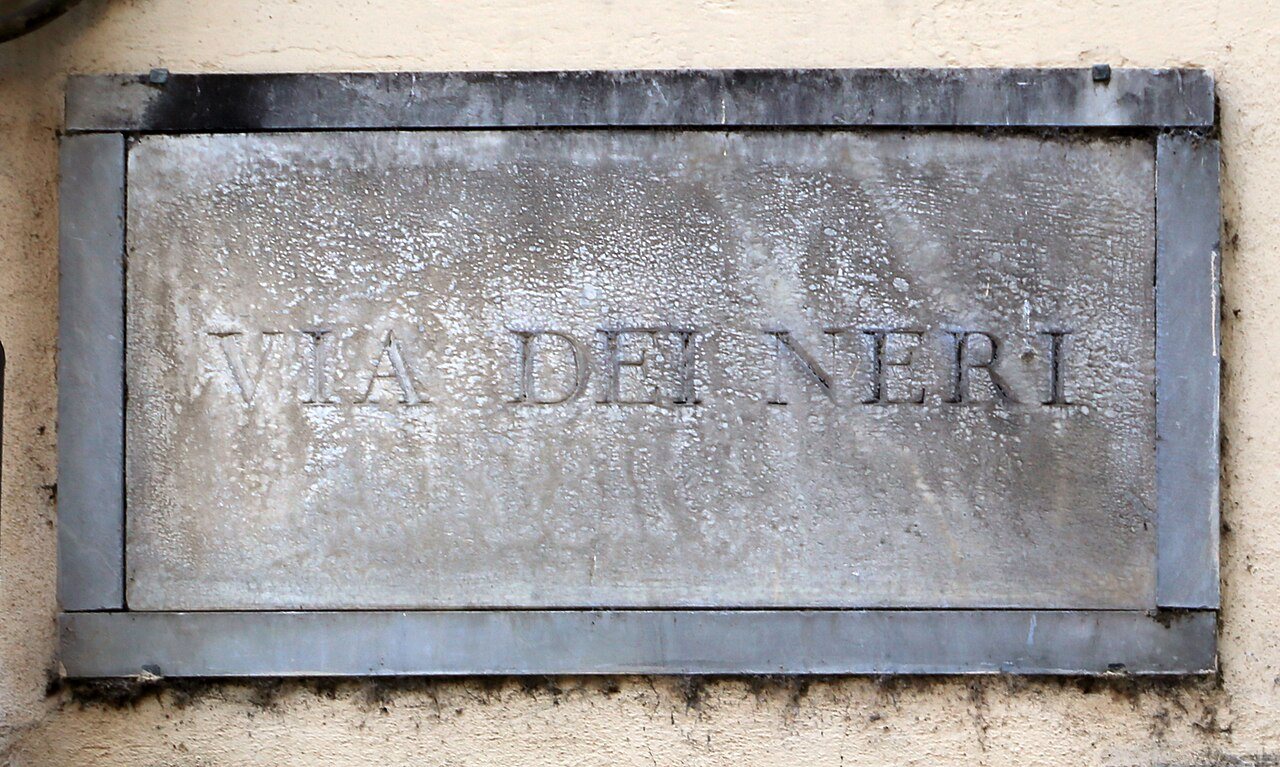
Walk down Via de' Neri any day of the week and you will find a line of people pressed against the wall of a narrow shopfront, most of them holding a wrapped sandwich the size of a forearm, eating standing up because there is nowhere to sit. This is the Florentine sandwich at its most famous and most crowded, and it is worth understanding before you decide whether to join the line or walk two streets over and eat just as well.
What makes a Florentine panino different
The base is almost never a soft supermarket roll. It is schiacciata, a flat, olive-oil-rich bread pressed thin and baked until the crust crackles, or a dense, close-crumbed country loaf that can hold up to being stuffed without collapsing. Inside, the building blocks are regional rather than generic: finocchiona (a fennel-seed salami), prosciutto crudo toscano that is saltier and less sweet than its Parma cousin, pecorino at various ages, and the two creams that define the local style — crema di tartufo (a truffle-mushroom spread) and crema di carciofi (artichoke cream). Combine two or three of these and you have the template that every sandwich counter in the center is working from, even the ones with no queue at all.
A separate, older tradition sits alongside it: the lampredotto sandwich, made from the fourth stomach of the cow, slow-simmered and served in a bun dipped in its own broth, usually topped with a green salsa verde or a hot pepper sauce. This is street food in the literal sense — sold from small three-wheeled carts (trippai) that have occupied the same corners for generations. Florentines eat this standing at the cart, not as a novelty but as an ordinary lunch, and it tends to divide visitors sharply between enthusiasm and caution.
The queue on Via de' Neri
The street itself is a short connector running behind Piazza della Signoria toward Santa Croce, easy to miss on a map and easy to stumble into by accident, which is how most people first encounter the line. One shopfront on this street has become the reason for the queue: a counter-only operation where staff build sandwiches at speed, wrap them in paper, and hand them out faster than the line outside would suggest, because almost no one stays to linger — the whole point is to walk and eat.
⚠️ The queue moves faster than it looks, but it also reforms constantly, because this is one of the most photographed sandwiches in the city and a steady stream of people join at all hours. If you are short on time, the line is the wrong plan; if you have a loose afternoon and you're walking between Piazza della Signoria and Santa Croce anyway, it costs you little to fall into step.
⭐ Ordering here, and at similar counters, is quick if you already know what you want. Staff are used to fast decisions, not lengthy menu reading on the spot — have your combination in mind before you reach the counter, or simply ask for their most popular pairing and let them choose.
There is nowhere to sit, and the street is narrow enough that eating in place means eating in everyone else's way. The usual move is to take the sandwich and walk it toward Piazza Santa Croce or down to the river, where the steps and low walls along the Arno near Ponte Vecchio give you somewhere to actually perch.
Where else to eat well, without the line
The queue exists because one shop became a fixture of word-of-mouth and social media, not because the sandwich itself is unrepeatable. The same bread, the same cured meats, and the same truffle and artichoke creams are sold at delis and alimentari throughout the historic center, many of them with identical ingredients and no wait at all. Mercato Centrale, the covered market near San Lorenzo, is the easiest alternative: multiple counters on the ground floor sell made-to-order panini from the same category of ingredients, and the upstairs food hall gives you an actual table, which Via de' Neri never will.
For lampredotto specifically, Mercato Centrale's ground floor has long housed one of the city's known lampredotto counters, trading on a reputation built well before the sandwich became an attraction for outsiders — it's a fair place to try the dish in a calmer setting than a street cart, if the idea of tripe makes you want a safety net.
⭐ If you are building a day around the Duomo or the Uffizi, treat the sandwich as a mid-route stop rather than a destination meal. It travels well, it does not need a table, and it fits naturally into the gap between two sights rather than requiring you to sit down somewhere formal.
How to actually order
At counters like this, the system is built for speed and repetition, not customization. A chalkboard or paper menu lists the standard combinations by name; most regulars just point. If you want to build your own, name the meat first, then the cheese, then whichever cream you want — staff will usually suggest the pairing if you hesitate, since they've built hundreds of these that day already.
Cash and card are both generally accepted at the busier spots, but a smaller alimentari or a street cart may be cash-only, so it's worth carrying some coins and small notes before you go looking for lunch rather than discovering the gap at the counter. Portions are large enough that sharing one between two people for a light lunch is entirely normal and not treated as unusual by staff.
⚠️ Avoid eating directly in the doorway of any shop on a narrow street like Via de' Neri — it blocks the line and the sidewalk at once, and staff will ask you to move along. Take ten steps toward the piazza and the problem solves itself.
The sandwich is, in the end, a fairly simple piece of Florentine food culture that has acquired an outsized queue because it photographs well and travels well. Understanding the ingredients and the mechanism behind the counter — rather than the specific shop's reputation — means you can eat the same thing competently almost anywhere in the center, with or without the wait. For more on where the city's food habits concentrate, see food and drink and markets and shopping.
In pictures