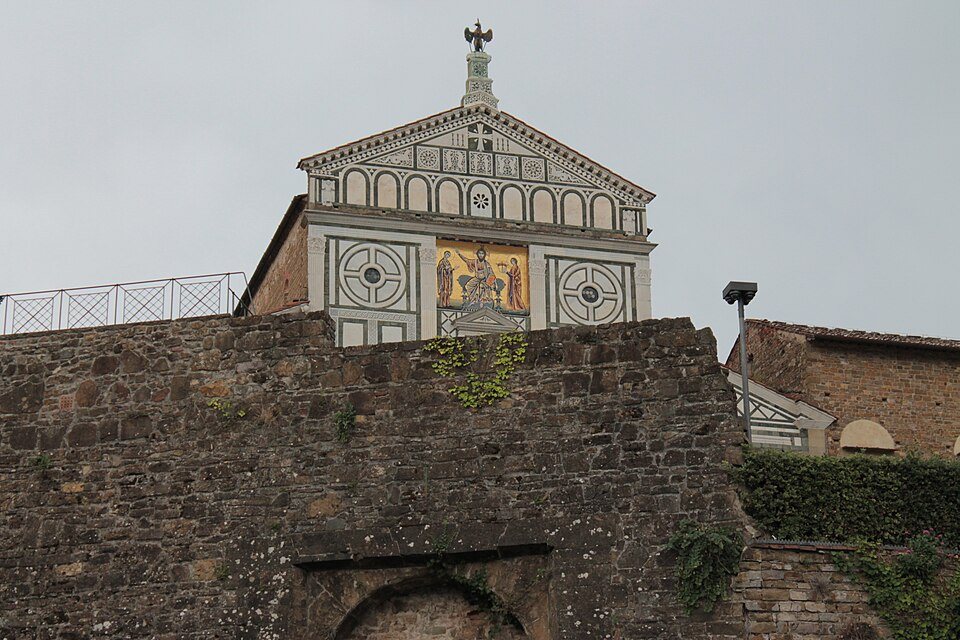
Almost everyone who crosses the Arno to climb the hill on the south side of Florence ends up at the same spot: the balustrade at Piazzale Michelangelo, phone out, bus idling in the car park behind them. It's a real view and a real photo. It is also not the top. The top is another ten minutes up a flight of steps and a tree-lined ramp, and it's where the walk actually pays off. This is the part of the hill most visitors never see, and the part locals go back to.
Why everyone stops at the piazzale
Piazzale Michelangelo is where the tour buses and the taxis can actually turn around, so it functions as a natural finish line whether or not it's anyone's intended destination. It has a parking area, souvenir stalls, and a wide-open sightline over the whole city — the Duomo, the Palazzo Vecchio tower, the hills behind — so a huge number of people arrive by wheels, take the photo, and leave the same way. If you drive or bus up, this is genuinely as far as the logistics push you.
But the piazzale was built as a monument to Michelangelo (there's a copy of the David in bronze at its center, plus copies of his Medici Chapel figures), not as a viewpoint that was meant to be the destination in itself. It's a nineteenth-century urban set piece, laid out by the architect Giuseppe Poggi as part of a larger remodeling of Florence's hillside edges. Treating it as the final stop means skipping the older, stranger, quieter place directly above it.
⚠️ If you arrive by car or organized bus tour, you may genuinely be dropped here and nowhere else — check what your transport actually allows before assuming you can walk on. See getting here and around for how the hillside routes and bus lines connect.
The last ten minutes, on foot
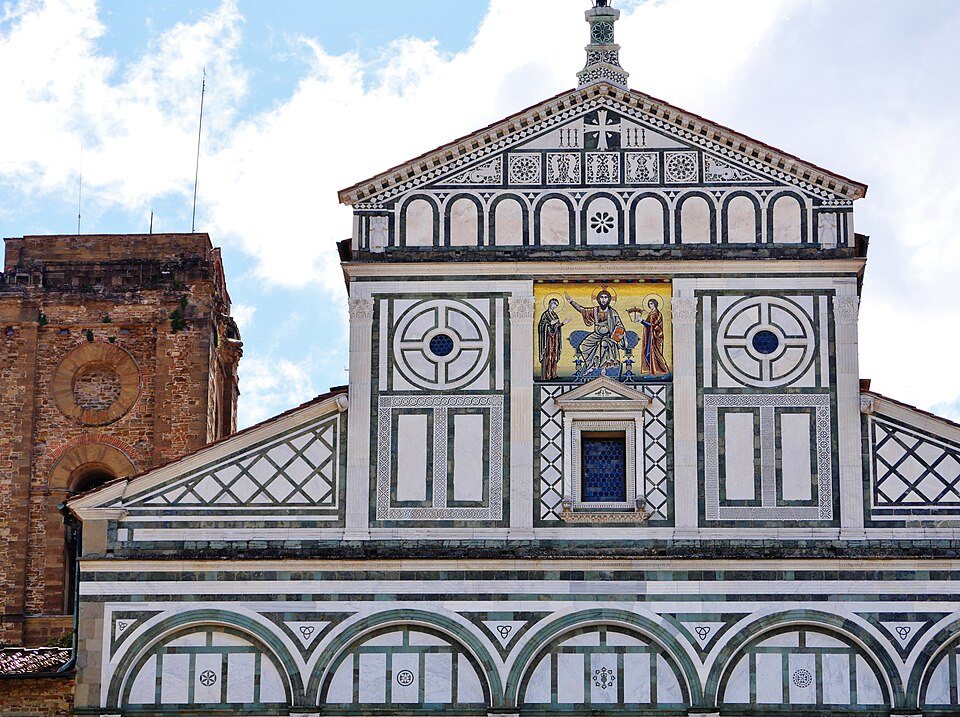
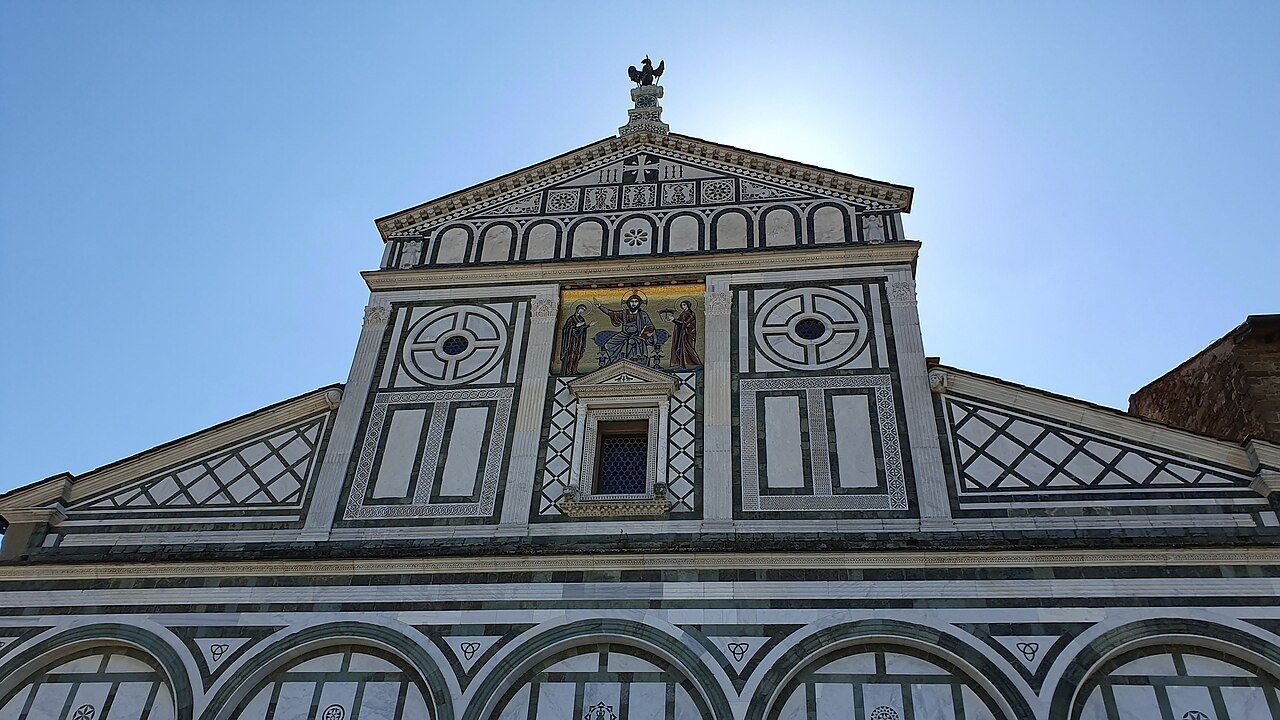
From the piazzale, the way up to San Miniato al Monte is a straightforward staircase and path, no scrambling required, but it's steep enough that people in flip-flops or pulling suitcases (yes, this happens) turn back. The reward for those ten minutes is a Romanesque church facade in green-and-white marble geometry, older and plainer in ambition than anything in the historic center, sitting on the actual highest point of this side of the city. The green-and-white banding shows up again at the Duomo and the Baptistery, but San Miniato's version predates both by a couple of centuries, and it has none of the crowd around it that they do.
The church has been here, more or less in this form, since the eleventh century, built over what was believed to be the burial site of Florence's first Christian martyr. Machiavelli, centuries later, was on the committee overseeing its fortification — this hill was militarily important during the 1529–30 siege of Florence, and the bell tower still shows where it took cannon fire. None of that history is visible from the piazzale below. It only becomes real once you're standing in front of the building.
⭐ Walk around the right side of the church before going in. There's a small cemetery, the Cimitero delle Porte Sante, laid out in the nineteenth century with elaborate family tombs and a genuinely eerie quiet — it's one of the least visited corners of Florence with one of the best views, since it sits slightly higher and further back than the church terrace itself.
What you get inside, and what to skip if you're short on time
Inside, the floor is inlaid marble from the twelfth century, patterned with zodiac signs and animals, and it's easy to walk straight over it without looking down — don't. The apse mosaic above the altar, Christ between the Virgin and Saint Minias, is a Byzantine-influenced design that was restored more than once but keeps its original composition. Downstairs, the crypt holds the relics associated with the church's dedication, and it's usually far less crowded than the nave above it.
The sacristy has a fresco cycle on the life of Saint Benedict, attributed to Spinello Aretino, which most visitors miss entirely because it's tucked off to one side and not signposted the way the main altar is. If you only have a few minutes, prioritize the marble floor and the apse mosaic over the sacristy — but if you have longer, the sacristy is the quiet payoff of the whole visit.
Monastic communities have maintained a presence here on and off for centuries, and it still shows in small ways — a shop area near the entrance, occasional chanted services. ⭐ If you want to hear it, ask locally or check with the church directly for when services happen, since this changes and isn't something to guess at from a guidebook. The same goes for entry into any specific areas of the church that are gated at certain points — verify directly with San Miniato rather than assuming based on what worked last year.
Getting up there without wasting the effort
You don't have to start at the piazzale at all. One of the better versions of this walk begins from the Oltrarno side near Santo Spirito or from the base of the hill near Porta San Miniato, following Via di San Salvatore al Monte or the switchback stairs (the "scalinata") up through trees rather than along the road buses use. It's steeper in places but far quieter, and it puts you right at San Miniato's steps without the piazzale detour at all — you can still walk down through the piazzale afterward if you want the wide view on your way back.
Timing matters more than most people think. Late afternoon, close to when the light goes gold over the city, is when the terrace in front of the church fills with people who know exactly where they're going — this is a local ritual, not just a tourist one, and it's worth being there for even though it means sharing the steps with more people than you'd find at midday. ⚠️ Whatever hours the church itself keeps for entry, they are not the same as when the terrace and grounds are accessible, and both can shift seasonally — confirm directly with the church rather than relying on a fixed assumption.
If you're building a longer day around this side of the river, it pairs naturally with a stop at Piazzale Michelangelo on the way up or down, and connects loosely to a broader theme covered in crossing the Arno and up the hill — the idea that Florence's most rewarding views and buildings are often the ones just past where the crowd decided to stop.
In pictures