The Uffizi has around a hundred rooms of paintings spanning five centuries, and most visitors give it the time they'd give a large parish church. Ninety minutes is not enough to see the Uffizi. It is enough to see the Uffizi's spine — the dozen or so rooms that hold the paintings people actually travel to Florence to stand in front of. The trick is deciding, before you walk in, which rooms those are, because the museum will not decide for you. It will happily let you spend forty minutes on Byzantine altarpieces and arrive at the Botticelli room exhausted and rushed.
This is a route, not a checklist. It assumes you've already sorted your ticket through booking and tickets — walk-up lines for the Uffizi can eat your whole ninety minutes before you've seen a single painting, so a timed entry booked ahead is the difference between this plan working and not.
Get to the second floor without stopping
The permanent collection starts on the second floor (Italians call it the third — floors here are numbered starting from zero), reached by a long staircase or an elevator near the ticket check. The first several rooms hold thirteenth- and fourteenth-century altarpieces — Cimabue, Giotto, Duccio, all facing each other in Room 2. These are genuinely important paintings, the ones art historians point to as the hinge between Byzantine flatness and something more human. If you have all day, linger. If you have ninety minutes, walk through at a normal pace, glance at the three enormous Maestà panels, and keep moving. You can't do justice to five centuries in an hour and a half, so decide now that your justice will go to the Renaissance rooms further in. ⭐ If the corridor is crowded, stick to the right-hand side going in — most tour groups cluster at the first Sala for a guide's introduction, and you can slip past.
The Botticelli rooms are non-negotiable
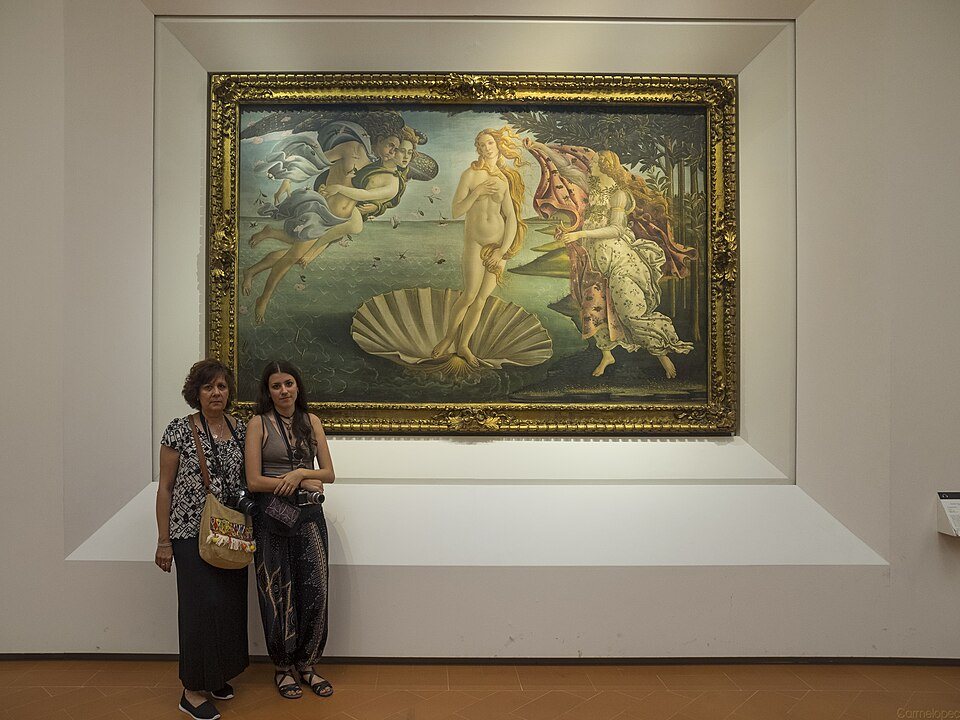
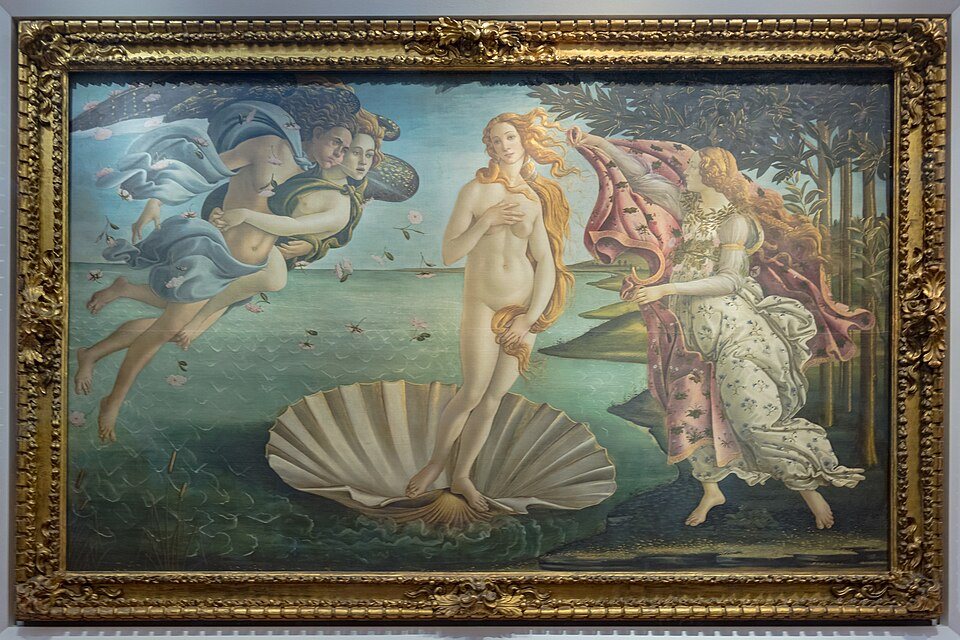
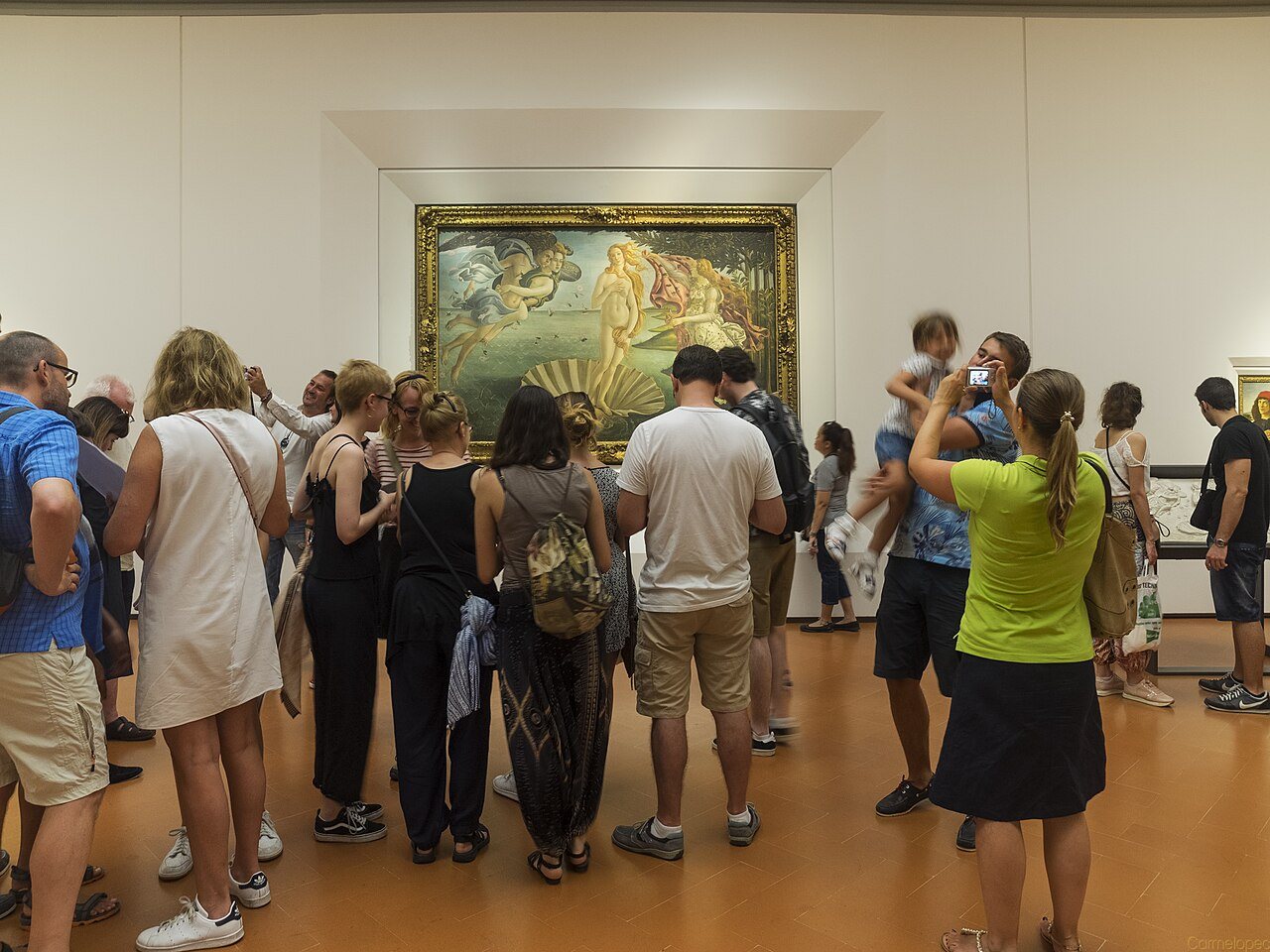
Everything before this is warm-up. Rooms 10 through 14, usually presented as one continuous space, hold the reason most people are here: Botticelli's Primavera and The Birth of Venus, along with his Pallas and the Centaur and several others. These were painted for Medici villas, not churches, which is part of why they feel different from everything around them — mythological, private, made for people who already had everything else. Give this room real time. It's the one place in the museum where standing an extra ten minutes in front of a single painting pays off, because the detail rewards it: the transparent drapery on the Grace on the left in Primavera, the flowers that botanists have identified as specific species rather than generic blooms, the odd cool light in Venus that doesn't match any natural sunrise. ⚠️ This room draws the biggest crowds in the museum outside of peak Caravaggio interest, and phone-holders will be three deep at the rope in front of Venus. Approach from the side rather than fighting for the center — the side view is nearly as good and far less contested.
Push on to Leonardo, then don't get stuck
Past the Botticelli rooms, Room 15 holds Leonardo's unfinished Adoration of the Magi and his early Annunciation, worth two or three minutes each — the unfinished one especially, because you can see the underdrawing and get a rare look at how a fifteenth-century painter actually built up a composition. Many visitors stall here for too long simply because the room feels like a natural resting point after the Botticelli crush. Keep the pace up. The corridor connecting the wings runs along the building's top floor with windows looking out over the Arno toward Ponte Vecchio on one side and down into Piazza della Signoria on the other — this is also where you get the closest thing to a view of the enclosed Corridoio Vasariano passage the Medici used to move between the Uffizi and Palazzo Pitti without touching the street. It's a good thirty-second stop, not a ten-minute one.
The second half: Michelangelo, Raphael, Titian, Caravaggio
This is where the ninety-minute visitor usually runs out of road, and it's a mistake, because the second half of the collection is not a lesser sequel. The Tribuna, an octagonal room built specifically to display the Medici's most prized objects, holds Roman sculptures alongside Bronzino portraits of the Medici family and deserves a stop for the room itself as much as its contents — it was designed as a jewel box, and it still reads as one. From there, Michelangelo's Doni Tondo — his only finished panel painting to survive, made for a wealthy Florentine merchant's wedding — sits in its own room with an elaborate frame he may have designed himself. Nearby, Raphael's portraits and the Titian rooms, including the Venus of Urbino, are usually far less crowded than the Botticelli wing simply because visitors don't make it this far. That's your advantage: these rooms let you actually stand still and look. If Caravaggio interests you, his rooms are further along and hold the unsettling Medusa, painted on a ceremonial shield, and Bacchus, a young man styled as the wine god with a slightly queasy, too-direct stare. These rooms are worth the walk even at the cost of skipping some earlier corridors — if you have to make a trade, trade time from the very first Byzantine rooms, not from here.
A rough budget for the ninety minutes
- Entry and early rooms (2–9): brief walk-through, not a stop
- Botticelli rooms (10–14): the bulk of your time
- Leonardo room (15) and the river-view corridor: a quick pass
- Tribuna, Michelangelo, Raphael, Titian: the second half of your time
- Caravaggio, if you reach it: whatever's left
Don't try to see the ground-floor temporary exhibitions or the Vasari Corridor tour, if one is running, on the same visit — that's a separate trip with its own separate ticket and logistics best handled through booking and tickets. And resist the pull to stop at every gift shop display case; there's one at the end of the visit and another partway through, and both will happily absorb ten minutes you don't have. If ninety minutes turns out to feel too tight once you're inside — it often does — remember the Uffizi ticket typically allows same-day re-entry restrictions vary, so check with staff at the door rather than assuming. For a longer view of Florence's collections generally, the museums section has other galleries that pair well with a short Uffizi visit, including the sculpture at the Bargello, which takes real pressure off a rushed Uffizi trip by giving Michelangelo and Donatello a room of their own nearby.
In pictures