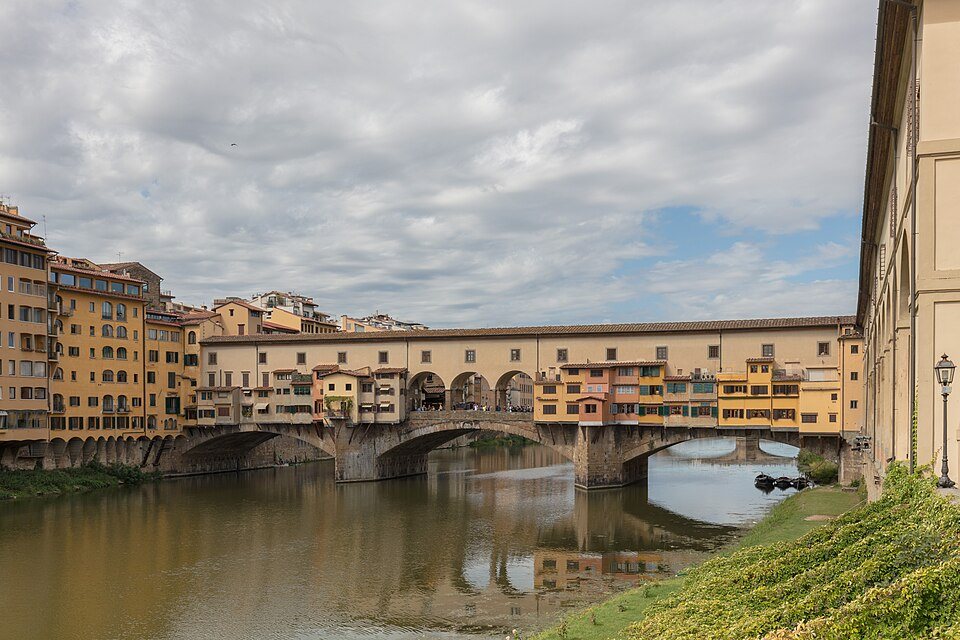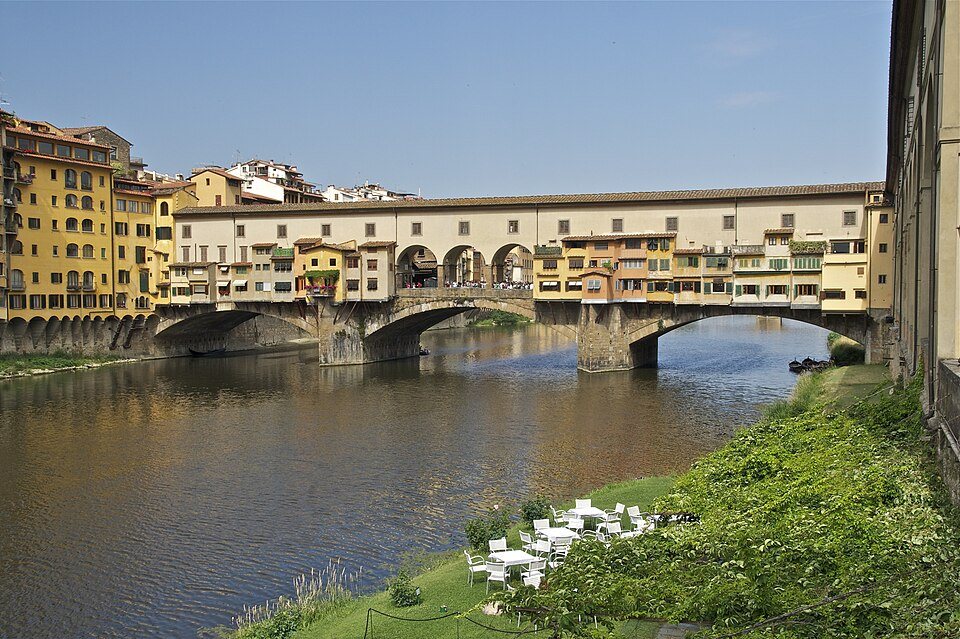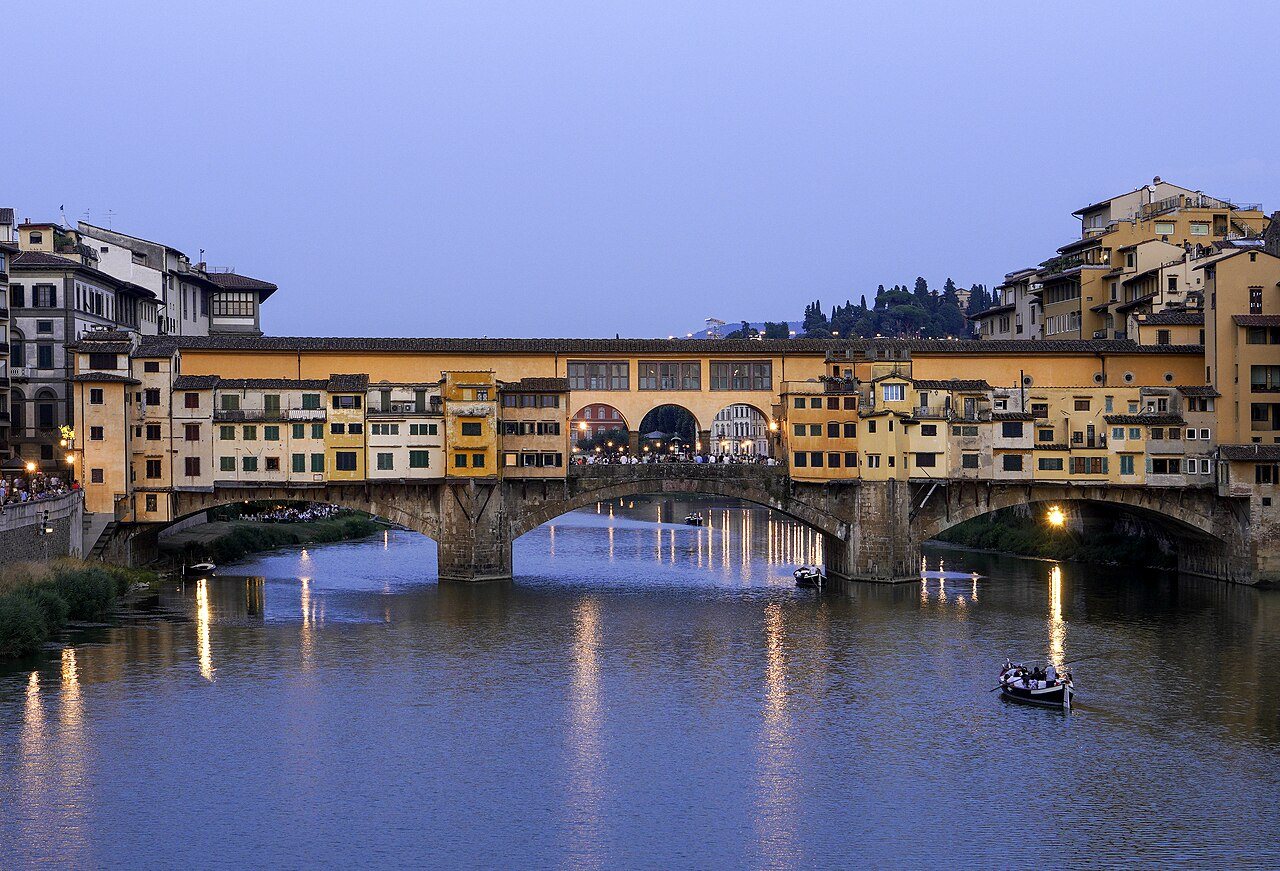
Most visitors cross the Arno once, walk to Palazzo Pitti, and walk back. That's a shame, because the streets on either side of Via Guicciardini hold one of the last working artisan districts in a European city center — not a recreation of one, an actual one, where the noise you hear through a half-open door is someone beating gold leaf or planing a picture frame. A morning spent going workshop to workshop, rather than sight to sight, is the best way to understand why Florentines still call this side of the river something slightly separate from the rest of town.
Why the far bank feels like a different city
The Oltrarno — literally "beyond the Arno" — was never part of the original Roman grid, and it shows. Streets curve instead of running straight, workshops spill their tools onto the pavement, and the buildings are lower and plainer than the palazzi across the river. This was historically where the trades that needed space, or that the smart part of town wanted at arm's length — tanning, dyeing, blacksmithing — were pushed. Some of that industry never left; it just got smaller and more specialized. Today it's frame-gilders, book restorers, and furniture conservators rather than tanners, but the working-neighborhood texture is the same.
Cross via Ponte Vecchio and you're already inside it, though the bridge itself, thick with gold shops, is the least representative part. Keep walking past the jewelers and the crowd thins within two minutes.
The workshops worth finding
There's no official list, no plaque system, and that's the point — you find these places by walking slowly and looking through doorways rather than following a map. A few streets reward that approach more than others:
- Via Maggio — the main artery out of Ponte Vecchio, lined with antique dealers whose windows are worth browsing even if you're not buying: inlaid cabinets, chandeliers, the occasional Baroque ceiling fragment propped against a wall.
- Via dello Sprone and the streets around it — smaller frame-makers and gilders, often a single craftsperson at a bench, working in a shop that hasn't changed its layout in decades.
- Borgo San Frediano — further west, less polished, more mixed with ordinary shops and bars; this is where a lot of the restoration studios that serve the Uffizi and other museums quietly do their work.
- Sdrucciolo de' Pitti, the short slope beside Palazzo Pitti — mosaic and pietre dure work, the inlaid stone technique the Medici court patronized, still practiced by a handful of studios.
⭐ Don't just glance and move on — if a workshop door is open and someone is visibly working, a polite pause at the threshold is usually welcome, and sometimes an invitation to look closer. These are working spaces, not shops staged for tourists, so the etiquette is closer to visiting a stranger's studio than browsing a boutique.
⚠️ Artisan hours in the Oltrarno are genuinely irregular — many close for stretches with no posted explanation, and a shop open on Tuesday may be shuttered on Thursday. If there's a specific workshop you want to see, contact them directly or check with your accommodation before building a morning around it; don't assume a walk-by will work twice.
Piazza Santo Spirito as a natural midpoint
The workshop streets fan out from, and lead back to, Piazza Santo Spirito, one of the few squares in central Florence that still functions as a neighborhood square rather than a monument backdrop — kids on bikes, laundry overhead, a market that sets up some mornings selling produce and secondhand clothes alongside each other. The basilica of Santo Spirito itself has a famously plain, unfinished facade — Brunelleschi's design for the front was never executed — which makes the calm, proportioned interior more of a surprise than it would be if the outside had prepared you for it.
This is a good place to sit for ten minutes rather than push straight through. The cafés on the square are ordinary neighborhood spots, not designed for tourist turnover, and that's exactly their appeal after a morning of looking into workshop windows.
A detour worth the small effort: Brancacci
A short walk from Santo Spirito, inside the church of Santa Maria del Carmine, is the Brancacci Chapel, frescoed largely by Masaccio in the early fifteenth century. It's easy to skip because it sits slightly off the obvious route and access is separate from simply walking into the church. That's a mistake — this is one of the paintings art historians point to as the actual hinge between medieval and Renaissance painting, the moment figures start standing with real weight on the ground instead of floating in gilded space. Bring the reader's attention here early in the morning if possible; the chapel is small and crowds inside it change the experience more than in most Florence sights.
How to string it together without over-planning
The honest advice is to resist a fixed route. Start at Ponte Vecchio, aim roughly toward Palazzo Pitti, and let side streets pull you off course — Via Maggio one way, Sdrucciolo de' Pitti the other, Borgo San Frediano if you have another hour. Piazza Santo Spirito works well as a lunch stop or a place to double back to. If energy allows, the workshops of the Oltrarno connect naturally to the climb toward San Miniato or Piazzale Michelangelo — see up the hill for that continuation — turning a workshop morning into a full day that ends with the whole city laid out below you.
For getting across in the first place and finding your way once you're on the far bank, see getting here and around; for more on the district's shape and boundaries, neighborhoods covers how the Oltrarno fits against the rest of the city. And if browsing turns into buying — a small marbled-paper notebook, a hand-gilded frame — markets and shopping has more on what's genuinely made locally versus imported and relabeled.
What stays with people after a morning like this usually isn't a single object or building — it's the sound. Hammering on leather, a hand plane on wood, the particular quiet of someone gilding in a back room with the radio off. Across the river, in the museums and churches on the busier side, everything is already finished. Over here, you can still watch it get made.
In pictures