Every visitor to Florence is sold leather at some point, usually within the first ten minutes of wandering near San Marco or the San Lorenzo street stalls. Jackets, bags, belts, wallets, little leather notebooks with the fleur-de-lis stamped on the cover. Some of it is made a few streets away by someone who learned the trade from a parent. A lot of it arrives on a truck from elsewhere and is simply being sold in Florence, which is not the same thing. The city doesn't make this distinction easy to see, and that's sort of the point: ambiguity sells better than honesty does.
This isn't really about telling you which stall or workshop to walk into — shops change hands, and a name that meant something ten years ago can mean nothing today. It's about giving you a way to judge what's in front of you, because the tells are consistent even when the businesses aren't.
The market stalls: San Lorenzo and beyond
The open-air leather market around Mercato Centrale and spilling down Via dell'Ariento is the first leather most people encounter, and it's worth understanding what it actually is before you decide what you think of it. These are independent vendors renting pitches, not a single market with a single standard. Some stalls sell goods made in small Tuscan workshops; many more sell goods made in larger Italian or non-Italian factories, finished or partly finished, then sold at a volume no artisan workshop could sustain. Both things are true at once, often two stalls apart from each other.
The giveaway is rarely the leather itself — synthetic coatings and bonded leather can look convincing under market lighting — but the sameness. If you see an identical jacket cut, an identical bag shape, and an identical stitching pattern across four or five stalls, that's not four artisans with similar taste; that's one supplier's inventory spread across several pitches. A genuinely small-batch piece has slight asymmetries: a strap punched a touch off-center, a lining that doesn't quite match the next one on the rack. Factory goods are symmetrical in a way that handmade goods usually aren't.
⚠️ Don't trust the words "vera pelle" (genuine leather) stitched into a tag as proof of anything beyond the fact that it contains some leather somewhere. It says nothing about where it was made, by whom, or how much of the item is actually hide versus bonded fiber and coating. It's a legal minimum, not a quality claim.
⭐ Ask a vendor directly where a piece is made. The honest ones will tell you plainly — "this is made near Florence," "this comes from a workshop in Tuscany," or just as often, "it's imported, good price." The ones who get vague or change the subject are telling you something too.
The workshops: where leather is actually cut and sewn
Florence's real leather trade is concentrated less in the market stalls and more in the Oltrarno, the neighborhood on the far side of the river where artisan workshops have operated for generations, many on streets like Via Santo Spirito and the lanes around Santo Spirito itself. These are working spaces, not showrooms dressed up to look like them — you'll often see tools, hides, and half-finished pieces on a bench rather than a wall of finished stock. If you can see someone cutting a pattern or skiving an edge while you're standing there, that's about as direct a confirmation as a shopper gets.
The other established name worth knowing is the Scuola del Cuoio, the leather school housed within the former monastery complex attached to Santa Croce. It was founded after the Second World War to train young leatherworkers, with support connected to Franciscan friars at the monastery, and it still operates as both a working school and a shop, with craftspeople visible at benches through the space. It's one of the few places in the city where the production and the point of sale sit in the same room, which removes a layer of guesswork for a visitor.
In either kind of workshop, the signs of quality are tactile rather than visual. Full-grain leather has a slightly uneven surface and a particular resistance when you flex it — it pushes back. Bonded or heavily coated leather feels flatter and more uniformly smooth, almost plasticky, and creases sharply rather than rounding. Stitching on a handmade piece is usually saddle stitching, two threads locking through each hole, which is far harder to pull apart than a single machine-chain stitch. Turn a bag or wallet inside out, if the seller allows it, and look at the raw edges: a burnished, sealed edge suggests care; a raw, fraying edge usually doesn't.
Neither: the goods that aren't really leather at all
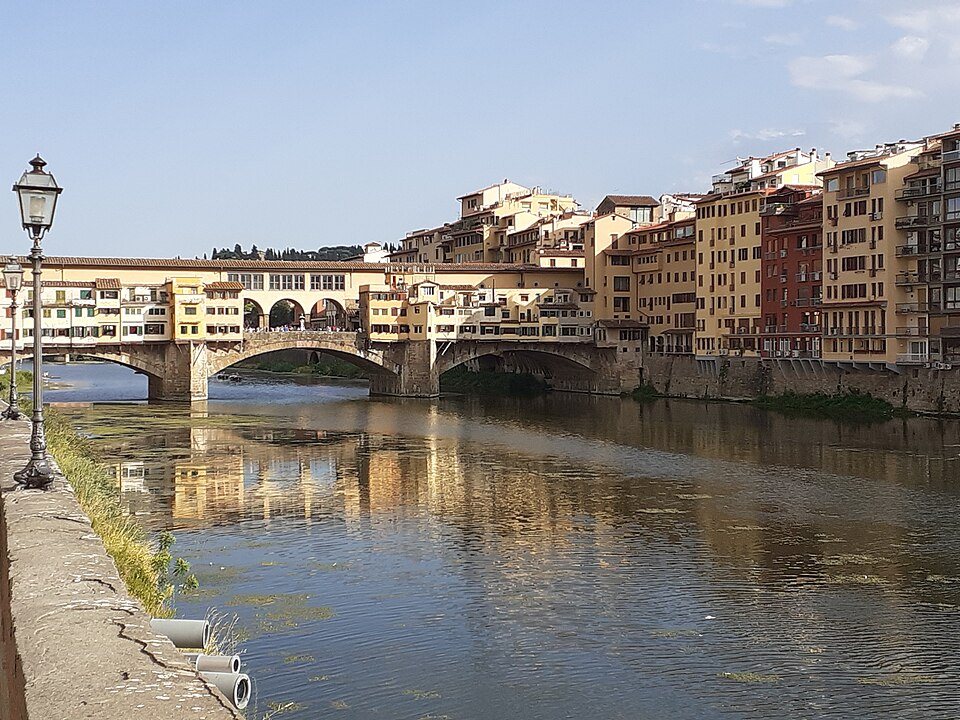
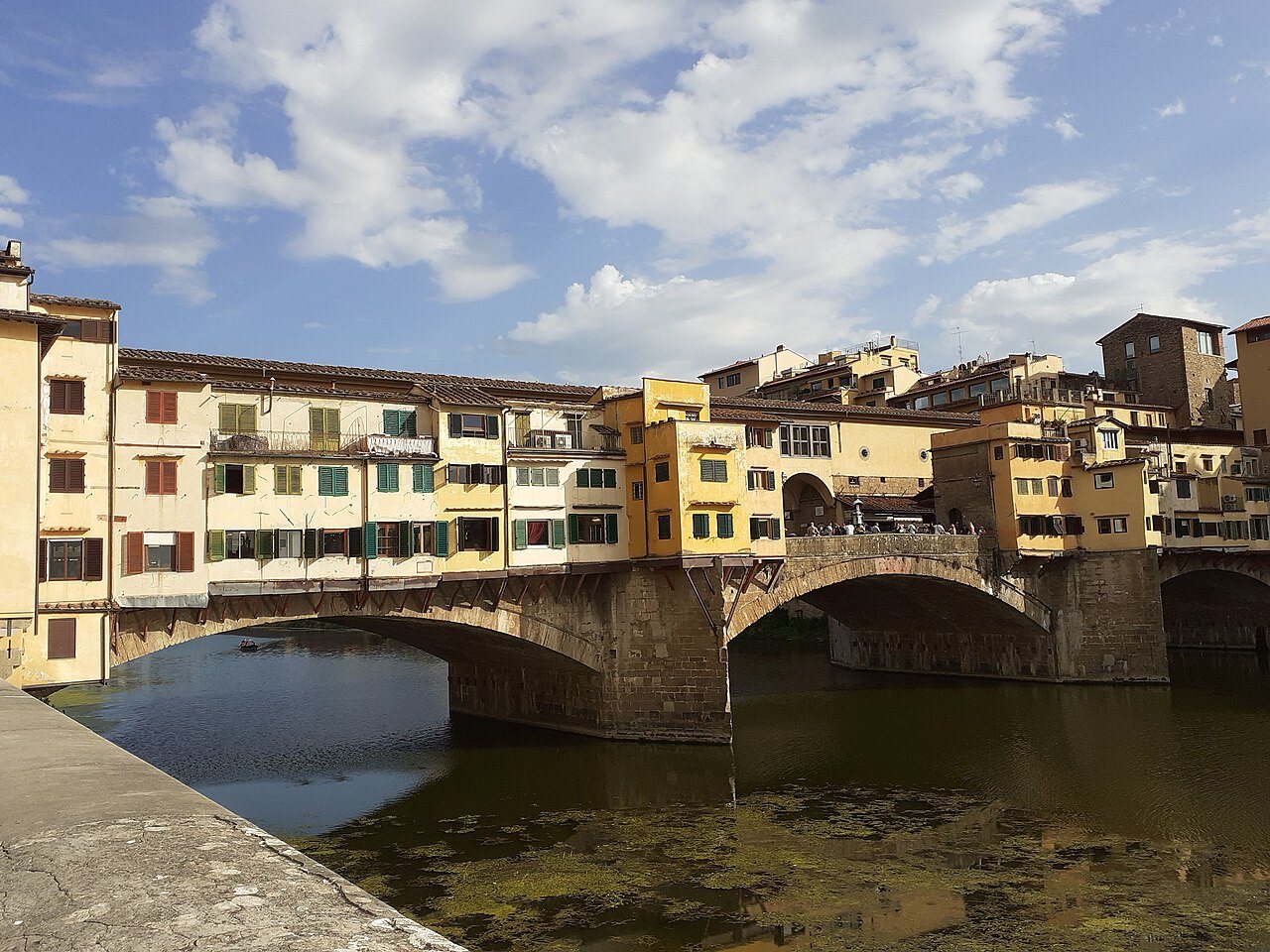
There's a third category that doesn't fit the workshop-versus-market frame, because it isn't really about Florence at all. Along some of the busiest tourist routes — near Ponte Vecchio, around Piazza della Signoria, outside major museums — you'll find stalls and small shops selling bags and jackets that are leather in name only: a PU or PVC coating over a fabric or fiberboard base, with no actual hide involved beyond perhaps a trim. These aren't fakes of a specific brand, usually, just generic goods riding on the city's reputation for leather the way a souvenir snow globe rides on its reputation for art.
There's nothing shameful about buying one of these if you know what it is and want a cheap, light souvenir — they're fine for that. The actual problem is paying artisan-adjacent attention and money for a factory-adjacent product because the setting made you assume otherwise. The smell is often the simplest tell: real leather has a warm, slightly animal, slightly oily smell; PU and PVC smell more chemical, sometimes almost like a new shower curtain, and that smell doesn't fade the way a leather smell mellows.
How to actually shop, not just look
Treat this less as a hunt for one correct shop and more as a short checklist you run through wherever you end up:
- Ask plainly where it's made, and watch how the answer is delivered, not just what it says.
- Flex the leather and smell it before you look at the price tag — the tag will try to answer the question before your hands do.
- Check stitching and edges, and ask to see the inside or underside if it's not obvious.
- Be more skeptical the closer you are to the Duomo, Ponte Vecchio, or any route between a major sight and a tour bus stop — foot traffic there rewards volume, not provenance.
- Remember that a fair price for a handmade piece and a market-stall factory piece will differ by a lot, not a little; if a "handmade" claim comes with a market-stall price, something in the claim is loose.
None of this requires expertise, just slowing down for the length of one conversation. Florence's leather trade has real craftsmanship in it, genuinely, but it shares sidewalk space with a much larger trade that's simply using the city's name. Both can be true blocks apart from each other, and the only way to tell them apart is to stop treating the transaction as a formality and start treating it as the one moment in the day you actually ask a question and wait for the answer.
In pictures