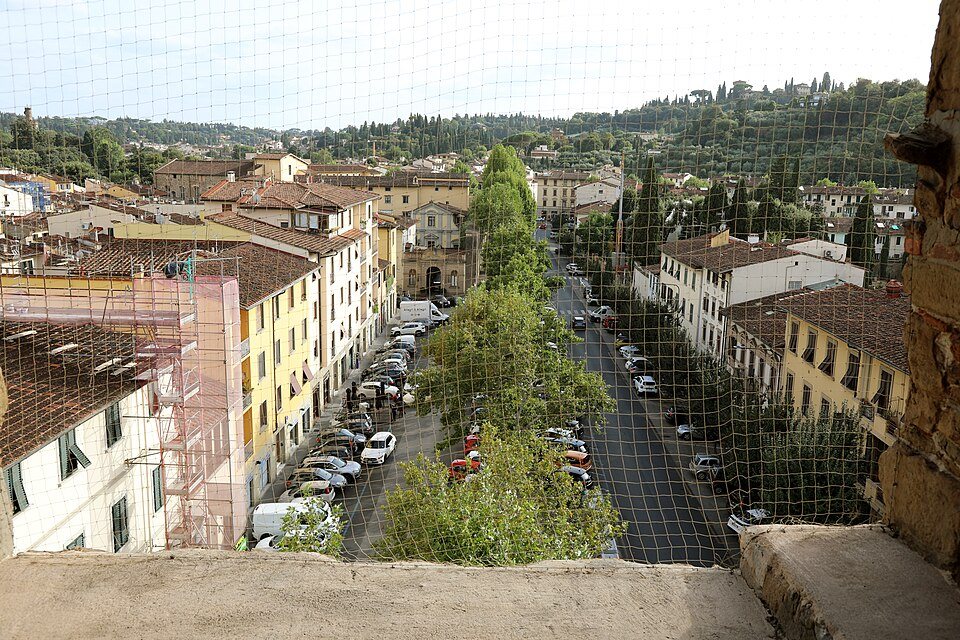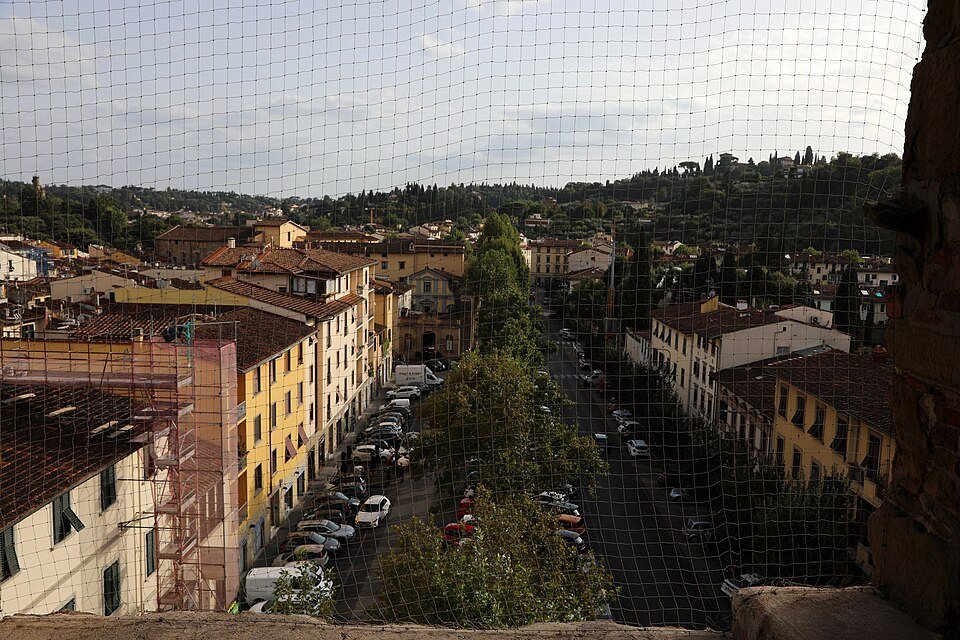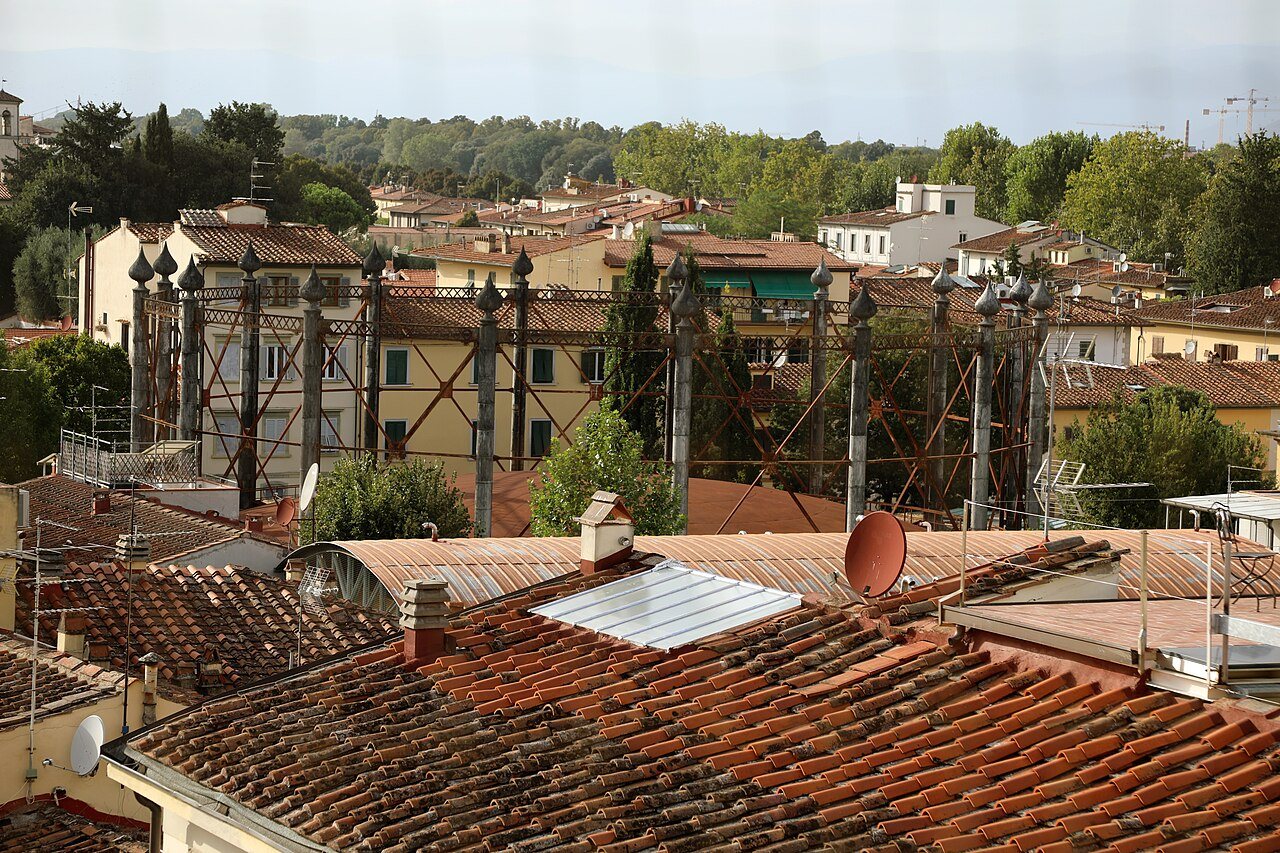
Cross the Ponte alla Carraia or the Ponte Vecchio and keep walking west, past the point where the crowd thins out and the shop windows stop selling leather bags shaped like the David, and you're in San Frediano. It is the last stretch of the historic center before the walls give out, and it has spent most of its history being useful rather than photogenic: tanneries, carpenters, dye works, a population that fixed things for a living. That fact hasn't gone away. It's just been joined by wine bars.
This is the neighborhood people mean when they say a part of Florence feels "real," a word that gets overused and misapplied almost everywhere else in the city. Here it holds up reasonably well, though less every year than the last.
Where it stops performing
The Santo Spirito side of the Oltrarno has already been discovered — the square, the church front that was never finished, the aperitivo crowd spilling off the steps. San Frediano is what's past that, roughly from Via Sant'Agostino and Via dei Serragli out toward the old gate. The street grid doesn't change, the stone doesn't change, but the ratio of actual residents to visitors does, sharply.
You notice it in small things. Shutters that stay closed over actual workshops, not storage for a souvenir stand. Hardware stores instead of gelato counters. A butcher with a line of Italian customers at an hour when nothing in the center center would be anything but empty or performative. None of this is staged for you, which is exactly the point — and also means it won't wait around to be admired. A workshop door that's open on your way in might be shut by the time you walk back.
⭐ The neighborhood rewards walking without an itinerary more than almost anywhere else covered on this site. Pick a street off the Brancacci Chapel end and just follow it; the dead ends and tiny squares are the content, not a detour from it.
The workshops that are still workshops
San Frediano's identity for centuries was craft — restoration, upholstery, picture framing, instrument repair, the unglamorous trades that keep an old city's furniture and buildings alive. A fair number of these survive, tucked into ground-floor spaces with no sign beyond a nameplate and a bell. Some restore antique furniture for dealers across the river. Some gild frames. A few still work leather the old way, with hand tools rather than a sewing machine running all day.
⚠️ Don't expect these places to function as attractions. Most are working businesses, not demonstrations, and a few have grown understandably tired of tourists treating an open door as an invitation to wander in and photograph someone at a workbench. If a shop looks genuinely busy, a nod and a question from the threshold goes further than stepping inside uninvited.
The area around Piazza del Carmine and Piazza Tasso has historically had the highest concentration of these ateliers, though you'll also find them scattered along Via Toscanella and the quieter lanes toward the river. This is also, not coincidentally, where you'll find the Brancacci Chapel, inside the church of Santa Maria del Carmine — Masaccio's frescoes sit almost incidentally in the middle of a neighborhood that has never organized itself around them the way, say, Santa Croce organizes itself around its own church. Book the chapel visit in advance through the official system rather than assuming you can walk in; access is limited and managed on a timed basis that the operator controls, not a schedule worth guessing at here.
Porta San Frediano and the edge of the old city
Walk the quarter out to its logical end and you hit Porta San Frediano, one of the few surviving medieval gates still attached to a long run of the old city wall. It's not polished or lit for effect — it's just there, enormous, with its original wooden doors still hanging, doing the job it was built to do in the fourteenth century: mark where Florence stopped. Standing underneath it does more to explain the scale of the medieval city than most museum displays manage.
From the gate, the Arno is close, and the riverside street here (Lungarno Soderini, Lungarno Corsini's less-visited cousin) gives a view back across the water that skips the postcard angle most people get from nearer the Ponte Vecchio. It's a useful spot to understand the river's working history too — this stretch was lined with the kind of industry that needed water, not views.
The church of San Frediano in Cestello, with its unfinished rubble-stone façade and oddly oversized dome for a parish church, sits near the river and gives the neighborhood its name. Like Santo Spirito's front, it was never finished in dressed stone, and nobody ever got around to fixing it. That's more or less San Frediano's whole architectural personality in one building.
Eating and drinking without a script
This is where San Frediano's reputation has shifted fastest. Via di Santo Spirito, Borgo San Frediano, and the streets threading off Piazza Tasso have become the place locals go for dinner precisely because the center has gotten expensive and generic. Small, genuinely Florentine trattorias sit next to newer wine bars run by people who grew up in the trade, and the crowd at both is a mix of residents, students, and visitors who did their homework. See Food and Drink for how this fits into eating well across the city generally.
⭐ If you want to understand the difference between a restaurant built for tourists and one built for its neighborhood, this is the part of Florence to test it in: menus in Italian first, portions sized for actual appetite rather than Instagram, and a till that doesn't hand you an English menu before you've asked.
⚠️ The nightlife here, especially around Piazza Tasso and Via dell'Orto, gets loud and dense late in the evening, mostly with a young local crowd rather than a curated "authentic Florence" experience — which is either exactly what you want or isn't, depending on what kind of evening you're after.
Getting there and not getting lost
San Frediano isn't served by any landmark that orients you the way the Duomo or Ponte Vecchio does, which is part of why it stays under-visited — people don't know where its edges are. The simplest approach is on foot from Santo Spirito or across the Carraia bridge; see Crossing the Arno and Getting Here and Around for the wider logistics of the south bank. There's no metro, and driving in is pointless given the restricted traffic zone that covers most of the historic center.
Treat San Frediano as the counterweight to a day spent in the museums and squares on the other side of the river — it belongs in the same trip as the Palazzo Pitti and Boboli Gardens, or paired with San Miniato up the hill, as the part of Florence that was never built to be looked at, only lived in. For more on how the neighborhoods fit together, see Neighborhoods.
In pictures