Florence sits on both banks of the Arno, but almost everyone's itinerary lives on one side of it: the Duomo, the Uffizi, Piazza della Signoria, San Lorenzo. The other bank — the Oltrarno, meaning simply "beyond the Arno" — gets treated as a side trip, if it gets treated at all. That's a mistake, but it's an understandable one, because the bridge you use to get there shapes how you think about the crossing. Cross at the wrong spot, at the wrong hour, and Oltrarno feels like an appendix. Cross at the right one and it feels like a different city that happens to share a river.
The bridges, and what each one actually does
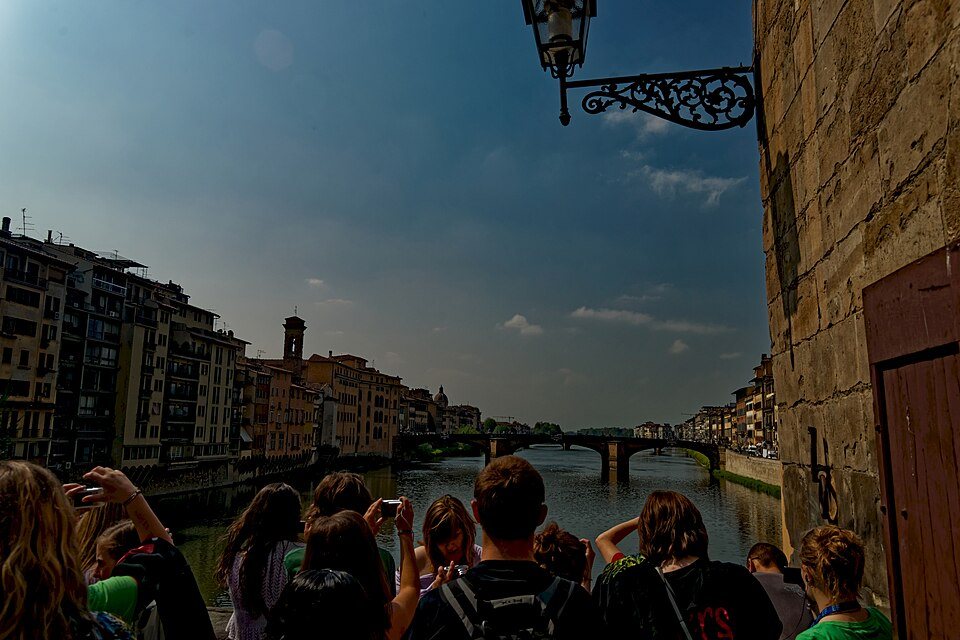
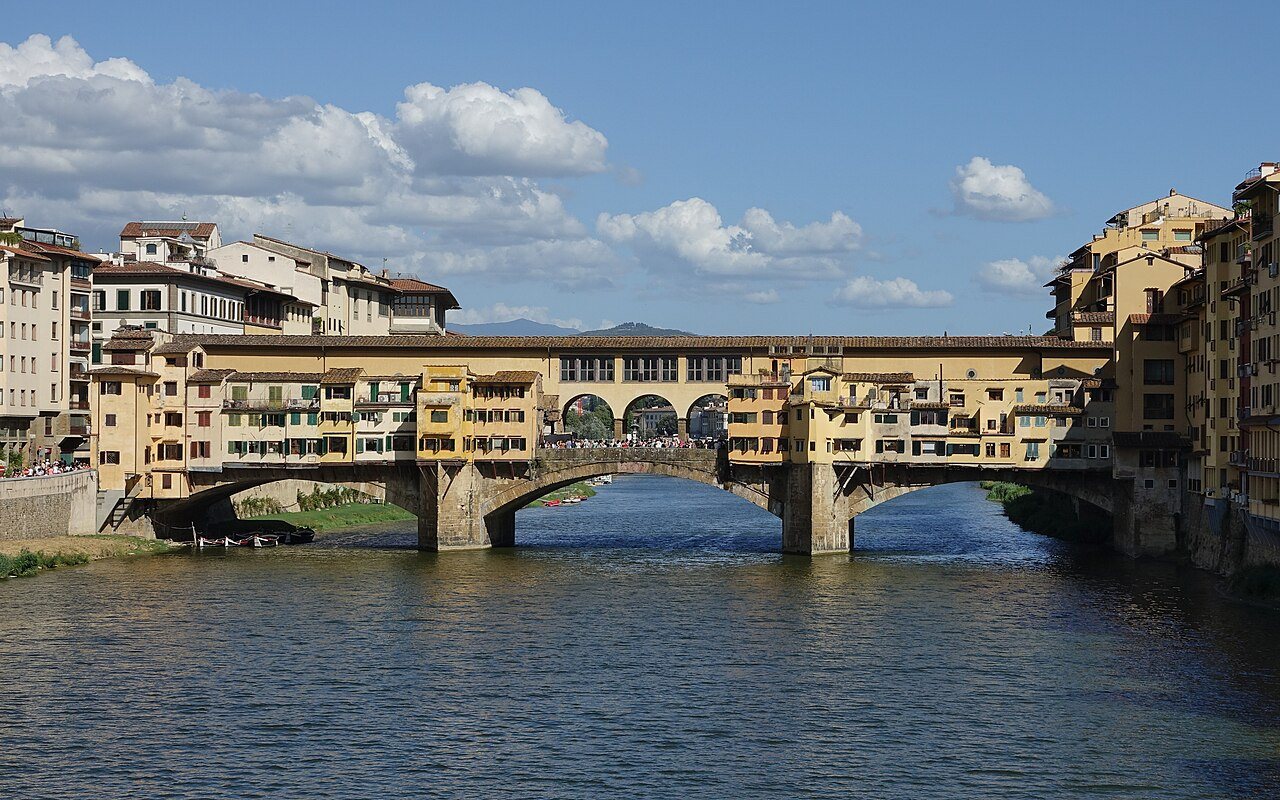
Ponte Vecchio is the one every visitor photographs, and it is worth doing once, but understand what it is: a covered market street that happens to span a river, lined with gold and jewelry shops that have occupied those same little cells since the Medici evicted the butchers centuries ago. Walking across it is slow going — it's narrow, it's full, and everyone stops in the middle for the view. Above the shops runs the Vasari Corridor, the private passage the Medici built so they could move between the Palazzo Vecchio and Palazzo Pitti without touching the street; you won't see much of it from below, but it's worth knowing it's there, threaded through the buildings over your head.
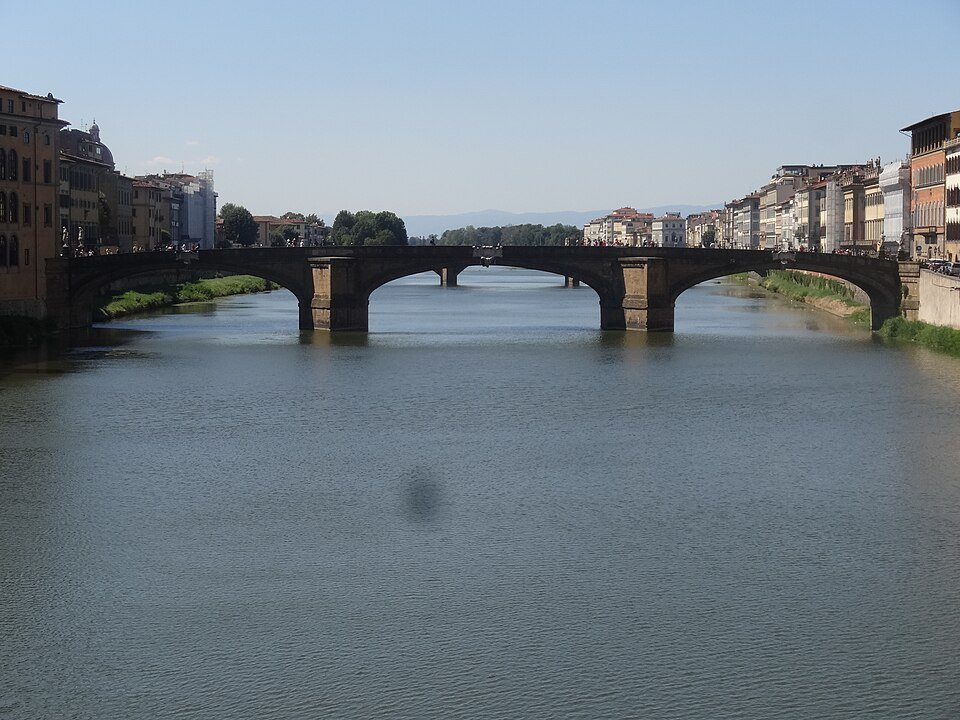
Ponte Santa Trinita, one bridge downstream, is the elegant alternative and the better photo spot precisely because it isn't the subject — it looks straight down the river at Ponte Vecchio, especially good in late afternoon light. The bridge itself was rebuilt after being destroyed in the Second World War, using the original stone fished out of the riverbed where possible; the four corner statues represent the seasons, and one of them lost her head in the wartime destruction and got a replacement that still doesn't quite match. It's a working bridge for Florentines, with real traffic and real buses, and it gets you to the Oltrarno with none of the shuffling crowd.
Ponte alle Grazie, further downstream again, is the plain one — no shops, no statues, nothing to detain you — which is exactly its appeal. It's the fastest way across if you're headed toward Santa Croce on one side or up toward San Niccolò and the hill on the other, and it's usually close to empty.
⭐ If your goal is simply to get to the Oltrarno with the least friction, skip Ponte Vecchio entirely and use Santa Trinita or alle Grazie instead. You'll save real time and arrive less frazzled.
What actually changes on the other side
The Oltrarno isn't a monument district; it's a neighborhood that happens to contain some serious monuments. The single biggest one is Palazzo Pitti, the Medici's second, grander palace, purchased from a rival banking family and expanded until it dwarfed anything the family had on the other bank. Behind it climb the Boboli Gardens, laid out as a stage set for Medici court life, with gravel paths, amphitheater seating cut into the hillside, and views back over the city that most visitors never bother to walk up for.
Closer to the river, Santo Spirito anchors a piazza that still runs a genuine local market some mornings and fills with students and residents by evening — it's the closest thing central Florence has to a neighborhood square rather than a monument backdrop. Nearby, the Brancacci Chapel holds the Masaccio frescoes that art history students cross oceans for, tucked into a church that gives no exterior hint of what's inside.
Keep walking uphill and the character changes again: past San Niccolò the streets get quieter and steeper on the way to San Miniato al Monte and Piazzale Michelangelo, both worth the climb for the same reason — the view back at the skyline you just came from, with the Duomo's dome doing exactly what Brunelleschi intended, dominating everything around it.
What you won't find as much of on this side: big-name museums packed into a few blocks, English menus on every corner, souvenir shops selling the same three t-shirt designs. What you will find: artisan workshops that still do restoration and leatherwork and frame-making behind unmarked doors, quieter trattorias, and streets where you can hear actual Florentine spoken at a normal volume. See neighborhoods for how the Oltrarno's character breaks down block by block.
Getting the crossing right
The most common mistake is treating Ponte Vecchio as a destination rather than a means of transport, then wondering why the Oltrarno felt underwhelming — because a five-minute wander past Palazzo Pitti's ticket line isn't the Oltrarno, it's just the edge of it. Give the far bank actual time, ideally a slow morning or a full afternoon, and go in with a specific target: the Brancacci frescoes, the Boboli gardens, or simply the walk up to San Miniato for the light around sunset.
⚠️ Ponte Vecchio is also the single most reliable spot in the city for pickpockets working the crowd that stops mid-bridge to take photos. Keep bags zipped and in front of you if you're going to pause there, and don't set anything down on the parapet to get a better shot.
Timing matters more than people expect. Cross early and Ponte Vecchio is nearly walkable at normal pace, with shopkeepers still raising shutters. Cross at midday in high season and it's a shuffle. The other bridges don't have this problem in the same way — Santa Trinita carries traffic and pedestrians without ever quite jamming.
None of this requires elaborate planning. Florence's center is compact enough that you can cross the river, wander an hour, and be back at Piazza della Signoria before you've used up half a day. The point isn't logistics; it's simply remembering that the river is a genuine boundary here, not a formality, and that the Medici themselves felt the need to build a private overhead corridor rather than mix with the crowd on the bridge below. If they wanted a shortcut, the crossing was clearly never trivial. For broader logistics on getting around once you're across, see getting here and around; for how to sequence a day that includes both banks, check itineraries.
In pictures