Florence likes to remember its Medici as patrons of painters and builders of domes. Less often does the city get credit for what Cosimo de' Medici actually did best, which was arrange other people's power so that it suited Florence. The clearest case is also one of the least visited by tourists with a map full of churches: his backing of a mercenary captain named Francesco Sforza for the dukedom of Milan, and the four decades of relative peace that followed.
A banker backs a mercenary
In 1447 the last Visconti duke of Milan died without a male heir, and the city tried, briefly, to govern itself as a republic. It did not go well. Milan's neighbors were circling, Venice most of all, and the republic needed a strongman to hold the territory together. That strongman was Francesco Sforza, a condottiere who had married into the Visconti family and who now wanted the dukedom outright.
Cosimo de' Medici had no formal title in Florence — he held no office that would explain his influence, which was rather the point — but he controlled the bank, and the bank had a branch in Milan. He lent Sforza money, kept lending through the lean years of the siege, and leaned on Florentine policy to favor him, even though this meant breaking with Florence's older habit of allying against Milan rather than with it. Venice, predictably, was furious: Florence's traditional position had been to check Milanese expansion, not fund it. Cosimo's calculation was different and, as it turned out, correct. A Milan run by a Sforza who owed Florence money and friendship was less dangerous than a Milan run by anyone else, and a stable northern neighbor meant Florence could stop fighting two-front wars.
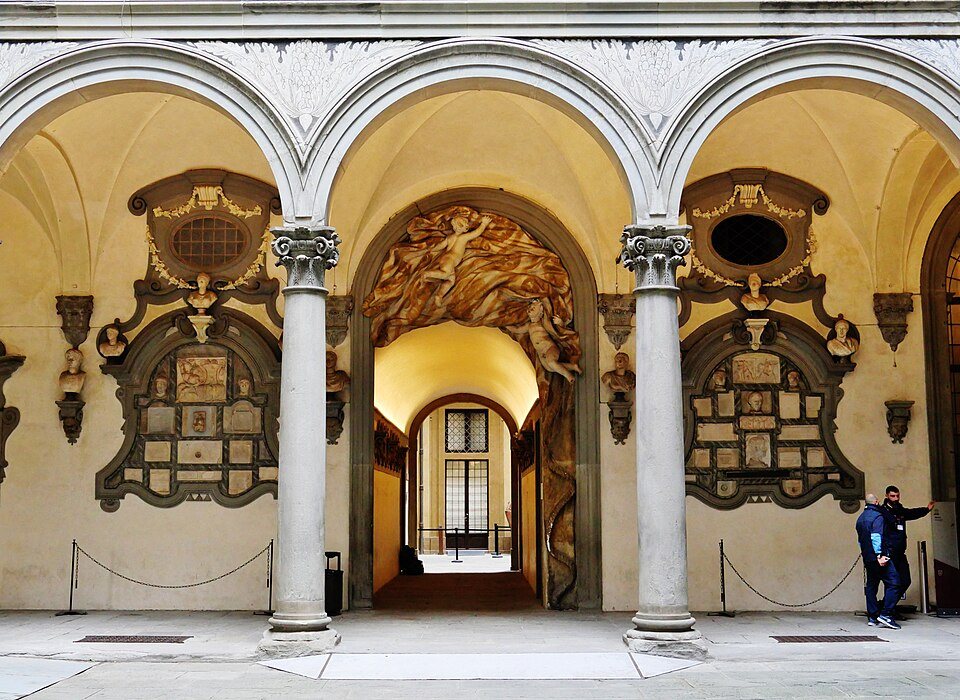
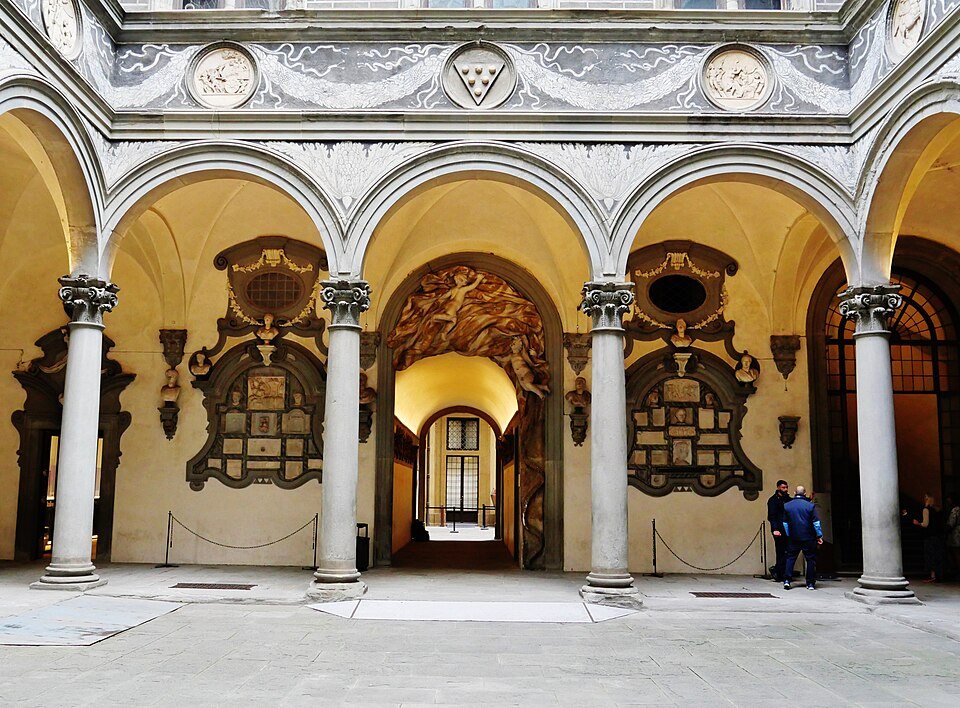
⭐ If you want the texture of this period rather than the politics, go look at Benozzo Gozzoli's fresco cycle in the small chapel of what is now Palazzo Medici Riccardi, a short walk from the Duomo complex. The Procession of the Magi is nominally a Biblical scene, but the riders are contemporary Medici allies and family, painted into the landscape as if the alliance itself were worth commemorating in gold leaf.
Lodi, and the league that followed
Sforza took Milan in 1450. Four years of further fighting wore everyone down enough that in 1454 the major powers signed the Peace of Lodi, and the following year extended it into what's usually called the Italic League — Florence, Milan, Venice, Naples, and the Papal States agreeing, in effect, to stop trying to erase each other. It was not idealism. Each state had simply run out of cheap ways to win, and a rough five-way balance suited the two biggest winners, Florence and Milan, better than another round of war.
The peace held, with plenty of friction and a few close calls, for about forty years. That stretch covers most of what people now think of as the golden age of the Florentine Renaissance: Lorenzo de' Medici's lifetime, the building projects, the flourishing of workshops that could only operate because the city wasn't bankrupting itself on mercenary contracts every other season. None of it was guaranteed. It depended on a specific, personal relationship between a banker who never held office and a duke who owed him his throne, and on their successors managing to maintain it without either man's judgment.
⚠️ Don't take "forty years of peace" to mean forty years of calm. There were conspiracies, assassinations, and at least one war involving Florence itself in that window — the Pazzi conspiracy of 1478 against Lorenzo and his brother Giuliano came directly out of this period's tensions. The peace was structural, between states; it didn't stop anyone's enemies at home.
Where the peace still shows in Florence
Most of the physical evidence of Cosimo's diplomacy is indirect, because diplomacy doesn't leave monuments the way building a dome does. But a few places connect directly.
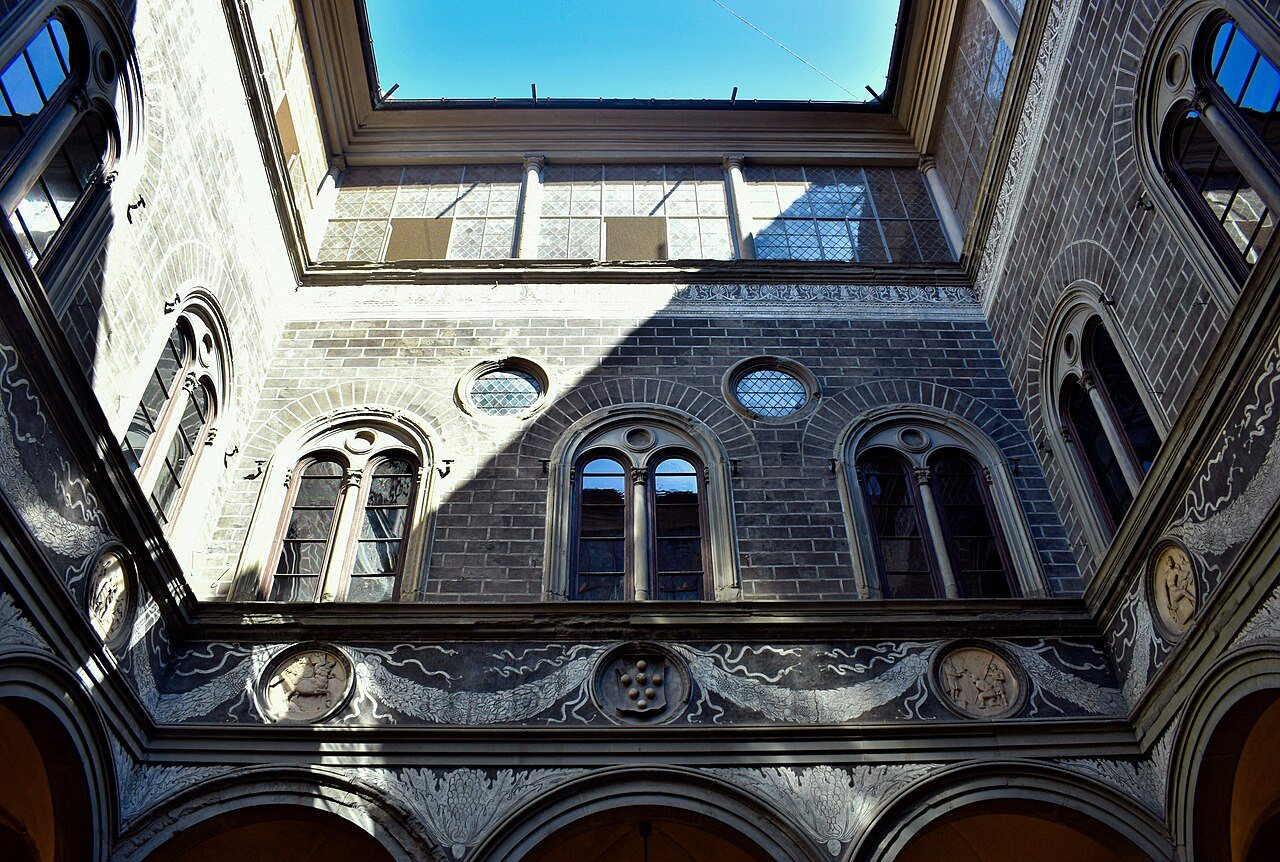
- Palazzo Medici Riccardi itself, the family's own house rather than a public palace, built in these years precisely because Cosimo could afford restraint and didn't need to compete with Milan's fortress architecture — Sforza was an ally, not a rival to intimidate.
- San Marco, which Cosimo funded as a Dominican convent and rebuilt with Michelozzo as architect. He kept a private cell there for his own retreats, a detail that tells you something about how a man running an international bank and a foreign policy chose to spend his quiet time. It's worth the walk north from the Duomo if you want Cosimo in a less political register.
- The Uffizi holds Piero della Francesca's double portrait of Federico da Montefeltro and his wife Battista Sforza, painted a generation into this same network of Italian courts marrying and allying across the peninsula. It's a small, famous panel, easy to miss among the larger rooms, but it's a good anchor for the idea that Italy in this period was a handful of interlocking families rather than a map of separate countries.
- Machiavelli, writing decades later in his commissioned Florentine Histories, treats the Sforza alliance as the hinge on which fifteenth-century Italian politics turned — proof that educated Florentines of the next generation understood exactly what Cosimo had engineered, even if they argued about whether it was wisdom or luck.
Why it didn't last forever
The Italic League's math only worked as long as none of the five powers got significantly stronger or significantly weaker, and as long as no outside power found it worth invading. Both conditions failed in 1494. Ludovico Sforza, Francesco's son, ruling Milan amid a succession dispute, invited the French king Charles VIII into Italy to back his own claim — the single worst miscalculation of the century, as it turned out, because the French arrived with an army nobody in Italy could match and didn't particularly want to leave. The peace Cosimo had built with Sforza's father ended, fittingly and bitterly, through a decision made by Sforza's own son.
That same year, 1494, Florence expelled the Medici and fell under the influence of Savonarola, which is a different article's worth of story. The point worth carrying with you around the city is simpler: the calm, productive decades that produced so much of what you'll see in the churches and galleries weren't a natural state of affairs. They were the product of one banker deciding to bet on one duke, against the advice of Florence's oldest allies, and being right for exactly as long as it mattered.
In pictures