Florence has a reputation as a city where everything costs something and everything has a line. Both are only half true. A surprising amount of what makes Florence worth visiting costs nothing at all, and a fair amount of what does charge admission can be seen without standing in a queue, if you understand why the queues form in the first place. This is a guide to both categories, written for people who would rather spend their time looking at things than waiting to look at things.
What costs nothing, ever
Churches are the backbone of free Florence. Most parish churches don't charge to enter the main body of the building, even when they hold frescoes that would be the star attraction of a lesser city. Santo Spirito is the clearest example: a Brunelleschi interior, flat-fronted and unfinished on the outside so that most tourists walk past it, with a wooden crucifix attributed to a very young Michelangelo inside. Nobody charges to walk in and sit down. The same is true of the exterior of Santa Maria Novella and Santa Croce — it's specific chapels, cloisters, or museum sections attached to these churches that charge, not the churches themselves, and it's easy to get the boundary wrong if nobody tells you where it is. ⭐ If you want to see a specific fresco cycle, ask at the door which parts are included before you pay for anything, because some ticketed areas are a side chapel and some are most of the building.
Piazzas cost nothing by definition, and Florence's are not decorative afterthoughts — they're where the city actually happens. Piazza della Signoria is an open-air sculpture gallery: a copy of Michelangelo's David stands where the original once did, alongside Cellini's Perseus and the Loggia dei Lanzi, which is itself unticketed and often ignored. Ponte Vecchio costs nothing to walk across, early or late, when the goldsmiths' shutters are down and the bridge belongs to joggers and delivery bikes rather than tour groups.
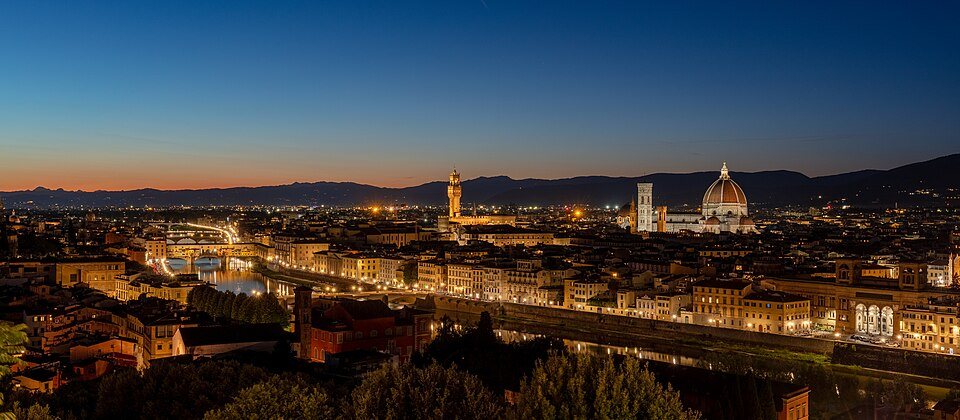
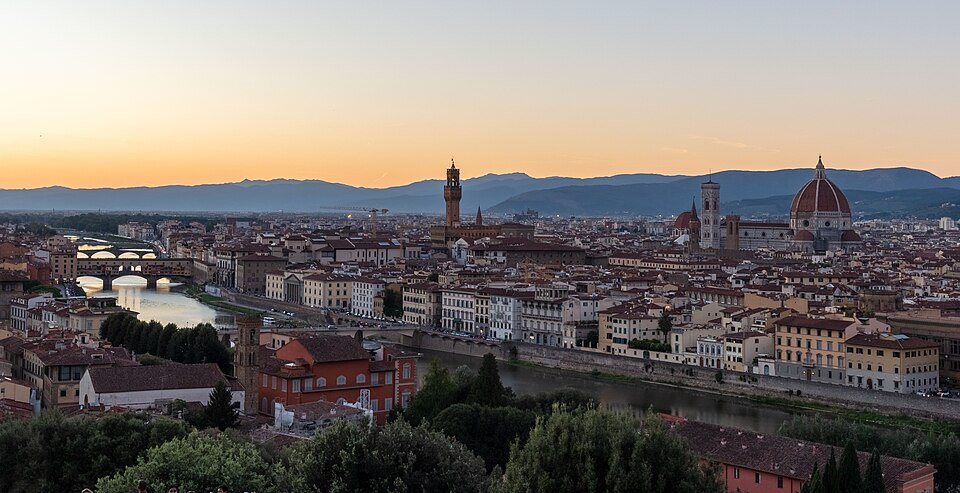
Two viewpoints are the best free attractions in the city, full stop. Piazzale Michelangelo gives you the postcard panorama of the Arno, the Duomo, and the hills beyond, and it costs nothing to stand there for as long as you like. Fewer people continue the extra climb to San Miniato al Monte, which has a comparable view with a fraction of the crowd, plus a Romanesque facade and a crypt that most visitors to Florence never see because they stop at the piazzale. ⭐ Walk up from Oltrarno rather than taking the bus — the route up through the rose garden is unremarkable on a map but genuinely pleasant on foot, and it's how you earn the view instead of just arriving at it.
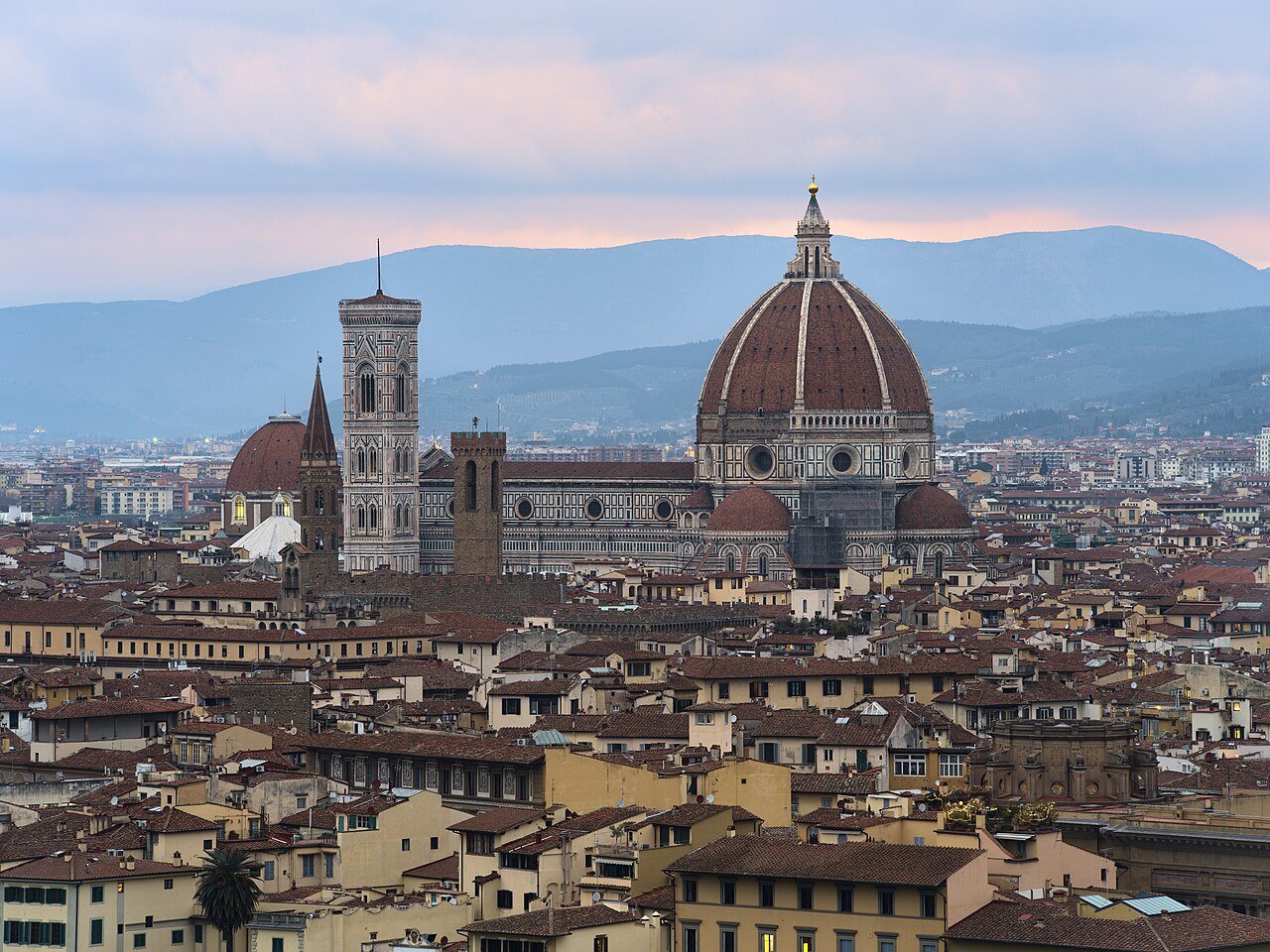
The Boboli Gardens and the cathedral complex are mixed cases worth knowing about separately: parts of Boboli Gardens and some elements of the Duomo complex involve a ticket, but the exteriors — the facade of Florence Cathedral, the exterior of the Baptistery with its bronze doors, the striped marble flank of Giotto's Campanile — are a free, unticketed spectacle that most people photograph and then forget was free at all.
Where the queues actually come from
It helps to understand that a queue at a Florentine museum is rarely about the museum being small. It's about everyone arriving at the same two or three hours of the day, because everyone read the same advice about "getting there early" and then all got there at the same early time. The Uffizi and the Accademia are the two worst offenders, both because they hold genuinely famous single works — Botticelli's Birth of Venus, Michelangelo's David — that people travel specifically to see, and because both buildings are physically narrow, which means a slow trickle of entries backs up fast on the street outside.
The mechanism that actually solves this is the timed-entry reservation, not arrival time. Booking a slot in advance through the official reservation system or a recognized vendor means you walk past the general queue, not through it. See booking and tickets for how that works in practice. ⚠️ Don't assume a museum has no queue just because it's less famous — the Bargello and San Marco are usually calm, but both occasionally get crowded around a single busload of a tour group, and that can look, for ten minutes, exactly like the queue you were trying to avoid.
Churches that charge for a specific chapel, like the Brancacci Chapel at the Carmine or parts of Santa Croce, tend to have much smaller queues than state museums simply because fewer people know they require a ticket at all. The Brancacci Chapel limits numbers inside at any one time, which occasionally means a short wait, but it's nothing like the Uffizi's switchback line.
The quiet hours, and how to use them
Florence's queues follow the cruise-ship and coach-tour schedule more than they follow the clock. The worst crush at any sight tends to hit mid-morning, once day-trippers from Rome, Venice, or a Mediterranean port have arrived and had breakfast. The gap right after a museum's first entry of the day and the window toward the end of opening hours are both comparatively calm — not because of any secret, but because most visitors simply aren't there yet, or have already left for lunch or dinner. Check each museum's own page for its current entry structure rather than assuming a single rule applies everywhere; the museums section has specifics for individual sights.
Weather does more to thin a queue than people expect. A grey, drizzly morning will cut the line at the Accademia by a third, because a chunk of visitors are outdoor sightseers who reschedule indoor museums for a sunny afternoon instead. If you're flexible, save your outdoor free sights — Piazzale Michelangelo, the piazzas, a walk through Boboli Gardens — for the better weather, and go to ticketed indoor museums when the sky looks uninviting to everyone else.
Finally, remember that free and uncrowded aren't the same thing, and neither is small and quiet. Santa Croce's exterior piazza is free and can still be dense with people at midday because it's also a gathering spot, a photo stop, and the start of several walking tours. The actual trick to a Florence without queues isn't a single hack — it's treating the day like the locals do, with sights visited in the dead zones between tour-group waves, and letting the truly free things fill the hours when everything else is busiest.
In pictures